Indonesia's mining investment climate is not one number, and the numbers that get quoted are usually the wrong ones.
The headline figure for 2026 is national. On 17 July 2026 the Ministry of Investment and Downstreaming / BKPM reported that Indonesia realised Rp1,010.6 trillion of investment in the first half of the year, 7.2 percent higher than the same period of 2025, absorbing 1,448,862 workers and equal to 49.5 percent of the country's full-year target of Rp2,041.3 trillion.
The mining figure is smaller, older and stated in dollars. According to the Directorate General of Mineral and Coal at the Ministry of Energy and Mineral Resources (ESDM), investment in the mineral and coal sub-sector was US$6.7 billion in 2025. In the same year the sub-sector paid Rp135.16 trillion in non-tax state revenue (PNBP), and by August 2026 mining PNBP had already reached Rp108.13 trillion — about 80 percent of the whole of 2025, on our arithmetic on the two published figures (no conversion between rupiah and dollars is published in the sources read here, so none is offered).
Those four numbers describe the same sector from two directions, and the distance between them is the climate. Capital is arriving. The state is measuring its own return on it, and that return is rising while physical output is not.
The two ledgers, side by side
| Measure | Period | Figure | Source |
|---|---|---|---|
| Realised investment, all sectors | H1 2026 | Rp1,010.6 trillion, +7.2% y/y | BKPM |
| — of which downstreaming (hilirisasi) | H1 2026 | Rp300.1 trillion, 29.7% of the total | BKPM |
| — against the full-year 2026 target | H1 2026 | Rp2,041.3 trillion, 49.5% achieved | BKPM |
| Foreign investment (PMA) | H1 2026 | Rp507.6 trillion, 50.2% | BKPM |
| Domestic investment (PMDN) | H1 2026 | Rp502.9 trillion, 49.8% | BKPM |
| Investment outside Java | H1 2026 | Rp507.8 trillion, 50.2% | BKPM |
| Mining sub-sector investment | 2025 | US$6.7 billion | ESDM / Ditjen Minerba |
| Mining non-tax state revenue (PNBP) | 2025 | Rp135.16 trillion | ESDM / Ditjen Minerba |
| Mining PNBP | to Aug 2026 | Rp108.13 trillion | ESDM / Ditjen Minerba |
| Mining sub-sector workforce | Semester I 2026 | 685,724 people | ESDM / Ditjen Minerba |
| Mining and quarrying share of GDP | 2023 | about 11%, down from 12% in 2022 | USGS, on BPS data |
| Employment in mining and quarrying | 2023 | about 1.66 million, 1.2% of total employment | USGS, on BPS data |
Two distinctions in that table are worth holding on to.
The first is realised investment versus state revenue. Rp1,010.6 trillion is capital that has physically landed, in every sector including property, transport and services. Rp135.16 trillion is what mining paid the state in 2025 in non-tax revenue. They are not versions of each other, and a permit strategy built on the first will not satisfy the second.
The second is the currency the sector is watched in. ESDM states mining investment in dollars and mining revenue in rupiah, in the same paragraph, in the same release. That is how the ministry accounts for the sector, and it is a reasonable guide to how it will assess a project: dollars of capital mobilised against rupiah of revenue delivered.
The capital is arriving as processing, not as extraction
The clearest signal in the 2026 data is what the money is buying.
Of the Rp1,010.6 trillion realised in the first half, Rp300.1 trillion — 29.7 percent — was downstreaming investment, and BKPM states that this was dominated by mineral commodities: bauxite, nickel, copper, steel and silica sand.
By sector, the first half of 2026 was led by the base metals industry, followed by other services, then mining, then transport, warehousing and telecommunications, then housing, industrial estates and offices. Extraction is third in its own sector's investment league, behind the industry that processes its output.
The quarterly detail adds a second-order fact. Investment Minister and BKPM head Rosan P. Roeslani put second-quarter downstreaming investment at Rp152.7 trillion, up 5.7 percent year on year and 29.8 percent of that quarter's total — and said that where nickel is usually first, bauxite took the top position for the first time, attributing it to bauxite projects built by both domestic and foreign investors.
Where the money physically lands
Capital in Indonesia is concentrated, and the concentration follows the processing build-out.
In the second quarter of 2026 the five largest provincial destinations were DKI Jakarta (Rp94.9 trillion), West Java (Rp61.3 trillion), North Maluku (Rp40.2 trillion), East Java (Rp40.1 trillion) and Central Sulawesi (Rp36.6 trillion). Foreign investment in that quarter was led by Hong Kong at US$5 billion — the release quotes the minister describing it as the first time in ten years that Chinese capital has moved so aggressively through Hong Kong — followed by China, Singapore, Japan and Malaysia, with those five sources accounting for 79.6 percent of foreign inflows.
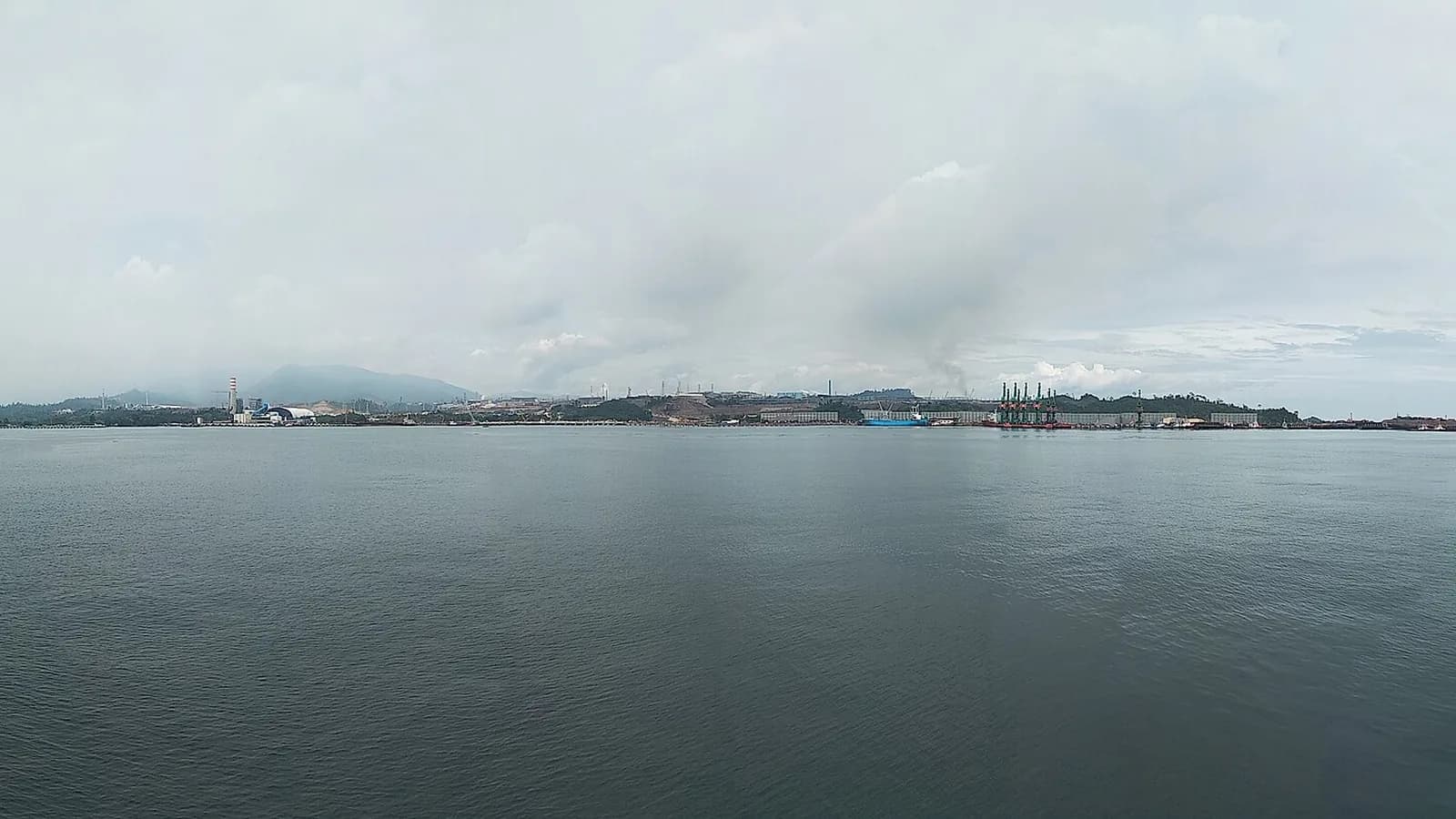
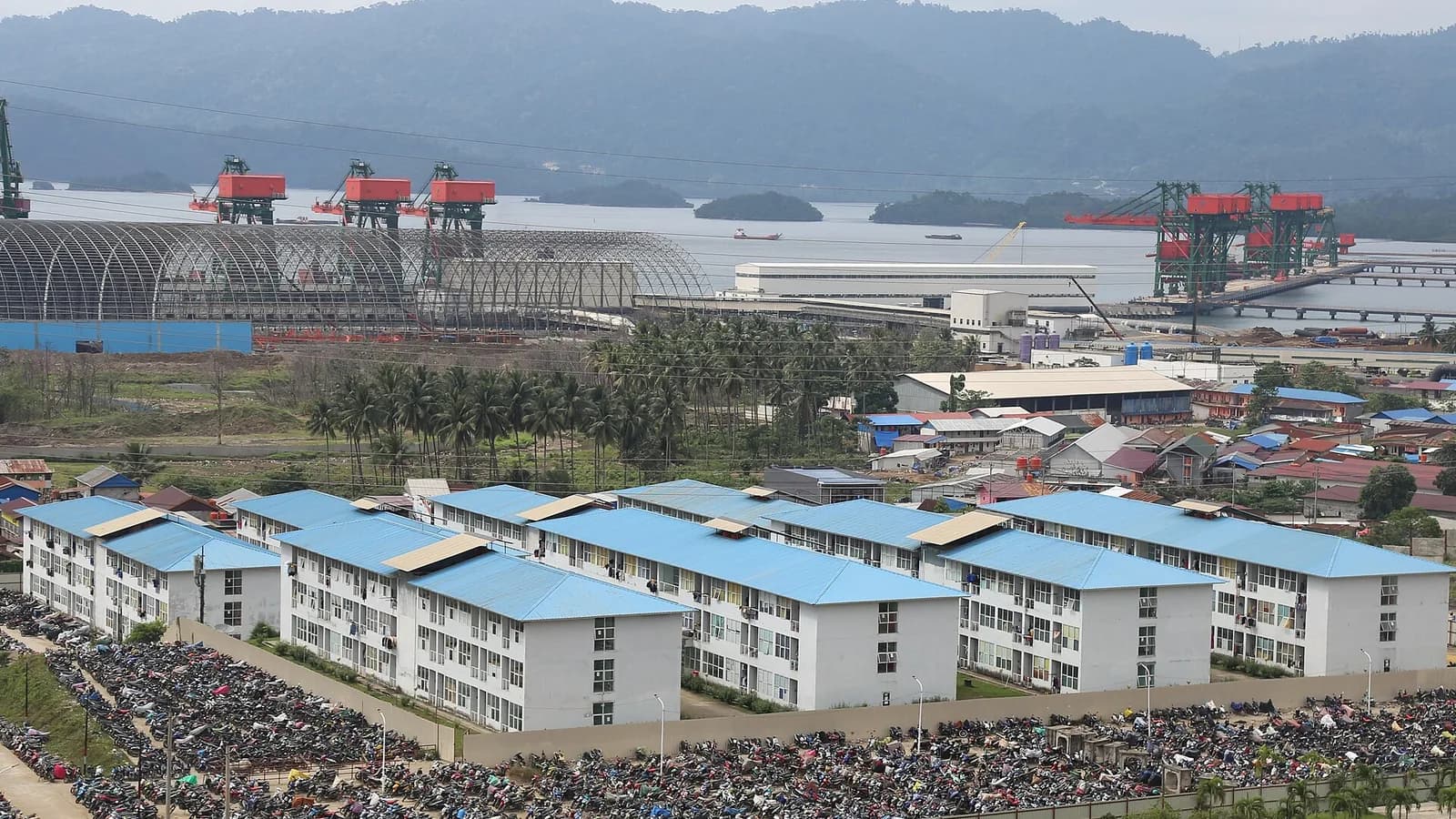
North Maluku and Central Sulawesi on that list are the nickel and processing provinces, and the U.S. Geological Survey names the facilities that put them there. Its 2023 Indonesia chapter locates, among others:
- PT Gunbuster Nickel Indonesia (North Morowali, Central Sulawesi; annual capacity 1,800 thousand tonnes) and PT Tsingshan Steel Indonesia (Morowali; 2,300 thousand tonnes) in the ferronickel and nickel pig iron group, with PT Sulawesi Mining Investment (Morowali; 250 thousand tonnes) and PT Obsidian Stainless Steel (Morosi, Konawe, Southeast Sulawesi; 2,000 thousand tonnes) in the same cluster;
- PT Weda Bay Nickel on Central Halmahera, North Maluku — a joint venture of Tsingshan Holding Group (51.3 percent), Eramet Group (38.7 percent) and PT Antam (10 percent), with capacity recorded at 2,300 thousand tonnes;
- the Obi Island group in South Halmahera, including PT Halmahera Jaya Feronikel (780 thousand tonnes), PT Megah Surya Pertiwi (240 thousand tonnes) and PT Wanatiara Persada (200 thousand tonnes);
- PT Huayue Nickel Cobalt (Morowali; 8 thousand tonnes of cobalt in mixed hydroxide precipitate) and PT QMB New Energy Materials (Morowali; 4 thousand tonnes), the MHP plants that feed battery precursor production.
A provincial investment table and a smelter capacity table are not the same document, and this article does not claim a rupiah figure per facility. What the two together show is that the provinces at the top of the investment list are the provinces where the processing capacity named by USGS sits.
A build-out that is still unfinished
The downstreaming pipeline is real but it is not complete, and the USGS chapter is specific about where it stalled.
Bauxite. Indonesia produced an estimated 30 million tonnes of bauxite in 2023 but exported only about 2 million tonnes, down from 18 million tonnes in 2022, after the export ban took effect in June 2023 — China being the sole destination. The ministry had expected all bauxite downstream projects to be finished before the ban; instead, eight alumina refineries and aluminium smelters were still under construction. The Association of Indonesian Bauxite and Iron Ore Business attributed the delay in part to construction cost, estimating an average aluminium smelter cost of about US$1.2 billion, above that of a nickel smelter.
Copper. PT Freeport Indonesia was building the Manyar smelter in Gresik, East Java — designed for 1.7 million tonnes per year of copper concentrate, at an estimated cost of US$3.0 billion, 90 percent complete as of December 2023 — and PT Amman Mineral Industri was building its own smelter in West Sumbawa, West Nusa Tenggara. Both projects had passed 50 percent construction before the June 2023 ban, which is why both companies were licensed to keep exporting copper concentrate and anode mud through May 2024.
Nickel. As of 2023 Indonesia had 44 Class II nickel smelters consuming 210 million tonnes per year of saprolite, with 25 more under construction and 28 in the planning phase, together expected to consume an additional 200 million tonnes per year. There were also three Class I hydrometallurgical plants running the HPAL process on almost 24 million tonnes per year of limonite, with six under construction and ten planned, expected to add 80 million tonnes per year of limonite demand. The ministry was already planning to limit new Class II pyrometallurgical smelters in order to slow the depletion of nickel ore.
Nickel sulphate. In May 2023 PT Halmahera Persada Lygend completed a nickel sulphate plant on Obi Island, South Halmahera, described by USGS as the country's first and the world's largest, with capacity of 240,000 tonnes per year of nickel sulphate containing 54,000 tonnes per year of nickel — the input for electric-vehicle battery cathode precursor.
That is the shape of the capacity an investor is being invited to build alongside: large, mineral-specific, capital-intensive for years before it earns, and pointed at nickel and bauxite first.
What the state says it is optimising for
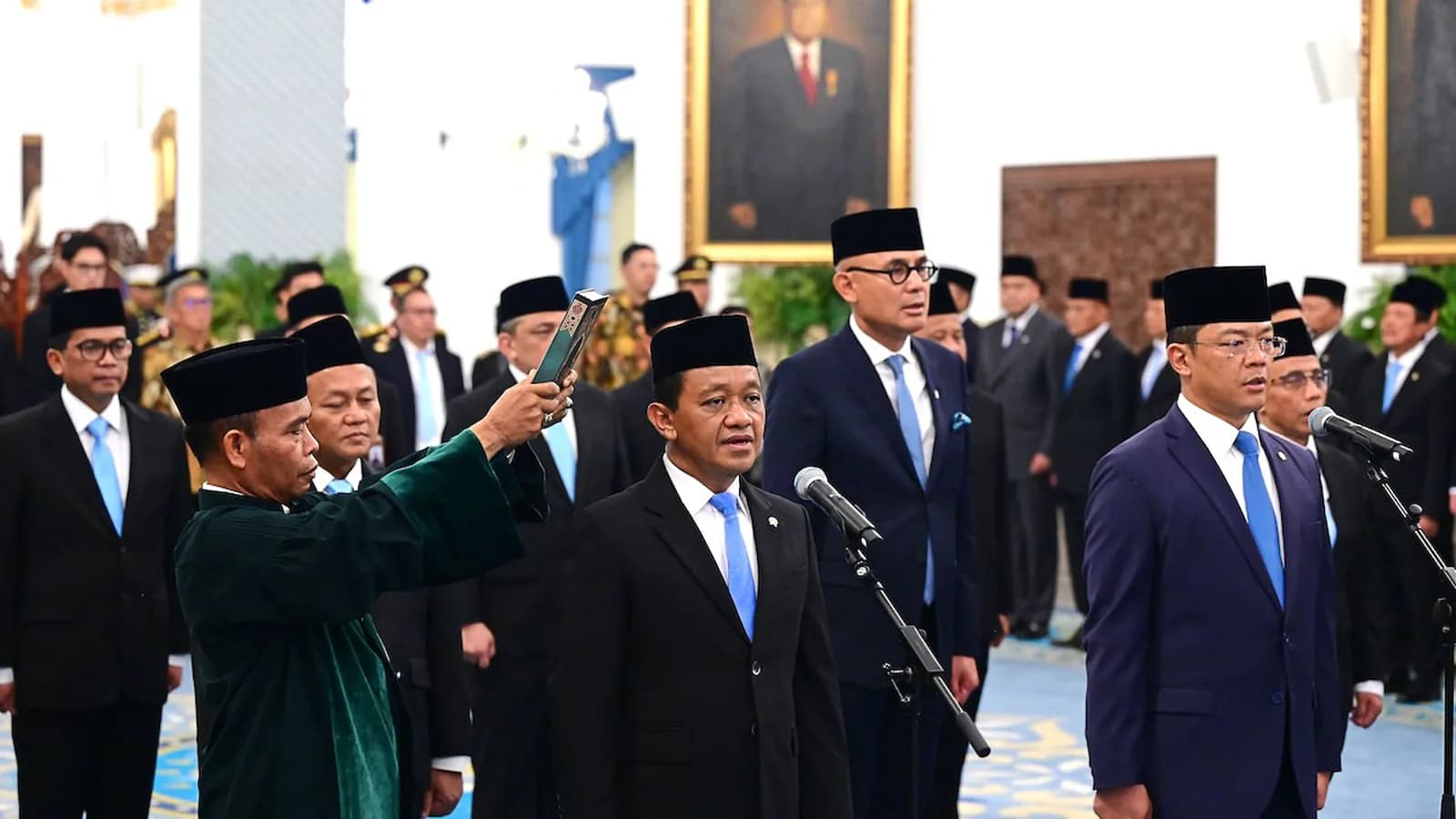
On 21 September 2026 ESDM published its own account of the policy, and the minister's words in it are the most direct statement of intent available in a primary source.
FACT"Alhamdulillah, dengan penataan terhadap pengaturan supply and demand, harga batu bara dan nikel Indonesia sekarang sudah lebih baik." — Bahlil Lahadalia, Minister of Energy and Mineral Resources, opening an ESDM blood-donation event in Jakarta, 21 September 2026. Translation: with the arrangement of supply and demand, the prices of Indonesian coal and nickel are now better.
FACT"Harga nikel sekarang mulai tidak lagi dipermainkan secara leluasa oleh orang-orang tertentu. Inilah sebenarnya tujuan kita. … produksi batu bara itu tidak sebanyak di tahun 2025, tetapi PNBP-nya lebih tinggi dibandingkan dengan 2025. Artinya, kita ingin produksinya tidak terlalu banyak, tapi pendapatan negara itu yang paling penting." — same briefing. Translation: the nickel price is no longer being played freely by certain parties; that is the point. Coal production is not as large as in 2025, but the non-tax revenue is higher than in 2025. We want production not too large, but state revenue is the most important thing.
The same release sets out the rest of the direction: governance reform in mineral and coal, including the supply-and-demand arrangement and the retuning of the RKAB — the annual work plan and budget; a move from an extractive industry to one with added value and a sustainability basis; optimisation of downstreaming; and Good Mining Practices. It also describes the community development obligation, PPM, by ring — Ring I, II and III, covering the communities directly affected by mining — and records about 2,587 MSMEs fostered by mineral and coal companies. The minister's framing places royalties as the contribution of large companies, alongside priority and room for micro, small and medium enterprises.
Read plainly, the objective function has three terms: state revenue, domestic processing, and community benefit. Capital mobilised is the input to those, not the goal in itself.
Timeline
| Date | What changed |
|---|---|
| 1 Jan 2020 | Nickel ore export ban takes effect, to secure unprocessed nickel for domestic processing |
| 2020 | The mineral export ban is postponed to 10 June 2023 |
| 13–17 Sep 2023 (listed 14 Sep) | MEMR issues its list of 47 critical minerals, with aluminium, cobalt, graphite, lithium, nickel, silica, tin and zirconium among them |
| Jun 2023 | Bauxite export ban takes effect; Indonesia produces about 30 Mt of bauxite in 2023 but exports only about 2 Mt |
| May 2024 | Concessionary exports of copper concentrate and anode mud end for smelters that had passed 50% construction |
| 2023 | Indonesia is the world's first-ranked nickel ore producer at 54% of global output, second in mined tin and cobalt, third in coal; mining and quarrying is about 11% of GDP |
| 2025 | Mining sub-sector investment US$6.7 billion; mining PNBP Rp135.16 trillion |
| 17 Jul 2026 | BKPM: H1 realised investment Rp1,010.6 trillion, +7.2%; downstreaming Rp300.1 trillion, 29.7%; bauxite leads downstreaming for the first time |
| 21 Sep 2026 | ESDM: mining PNBP Rp108.13 trillion to August; the minister links governance reform to higher revenue on lower coal output |
Dates to 2023 and the policy chain to that point are from the USGS Indonesia chapter; the 2025 and 2026 entries are from the ESDM and BKPM releases named at the foot of this article.
What this means for an investor
- Underwrite the state's three returns, not your own alone. Revenue, domestic processing and community benefit are the terms on which the sector is being steered, in the minister's own account. A project that delivers capital and exports a raw product is arguing with the policy rather than working inside it.
- The volume instrument is the RKAB, not the price. The governance reform named by ESDM includes the retuning of the annual work plan and budget, and the minister states explicitly that lower coal production with higher revenue is the intended outcome. Production quotas, not market prices, are the variable to model — see [What is RKAB in Indonesia](/en/news/what-is-rkab-indonesia), and the permit work behind it is at [permit and RKAB services](/en/layanan-izin).
- The cash cost is not volume-linked. Mining PNBP reached Rp108.13 trillion in eight months of 2026 against Rp135.16 trillion for the whole of 2025, while coal output ran lower than 2025 on the minister's own account. Revenue that holds up as tonnage falls is a cost that behaves independently of your mine plan. The instruments that make up PNBP, and how they differ from royalties, are set out in [Indonesia's mining royalties](/en/news/indonesia-mining-royalties).
- The geography tells you what the state wants next. North Maluku and Central Sulawesi — the nickel and processing provinces — are in the second quarter's top five investment destinations. Bauxite took first place in downstreaming investment for the first time. An asset outside those chains is competing for attention from a policy machine pointed elsewhere.
- Know who sits on the other side of the table. The state holding company MIND ID holds five mining and processing companies — PT Antam, PT Freeport Indonesia, PT Inalum, PT Bukit Asam and PT Timah — and wholly or partly foreign-owned operators include PT Freeport Indonesia, PT Vale Indonesia and PT Tsingshan Steel Indonesia. Equity rules for foreign holders are a separate question, covered in [Foreign ownership in Indonesian mining](/en/news/foreign-ownership-indonesian-mining).
- The community programme is a permit obligation. PPM is described by ring, with Ring I, II and III communities in scope, and sector data records about 2,587 MSMEs fostered by mining companies. It belongs in the cost model as a licence condition, not in a CSR annex.
- Structural change here is a policy mechanism, not a market cycle. The USGS account shows the bauxite ban arriving before the refineries were finished, and the export concession for copper concentrate granted to those who had passed half-built. Timing against the policy calendar has been as decisive as timing against the price cycle. Assets offered for sale in these chains are listed on the [marketplace](/en/marketplace), and the deal process itself is set out in [How to buy a mine in Indonesia](/en/news/how-to-buy-a-mine-in-indonesia).
What could not be sourced, and is therefore not stated
- Any commodity or origin breakdown of the US$6.7 billion mining sub-sector investment figure for 2025. ESDM publishes the total only; no split by mineral, by province or by PMA and PMDN was read.
- A mining-only figure inside the Rp1,010.6 trillion of realised investment for H1 2026. The sources read give mining's position in the sector ranking — third, behind base metals and other services — but not a rupiah value for it.
- The composition of the Rp135.16 trillion and Rp108.13 trillion in mining PNBP. No split between royalties, sales proceeds and other levies appears in the release read.
- Any conversion between the rupiah and dollar figures. The two currencies are published side by side in the same paragraph, with no exchange rate given, so this article does not combine them into a single quantity.
- A 2026 mining sub-sector investment total. The investment figure read is for 2025; no 2026 equivalent was published in the sources read.
- A rupiah value for bauxite investment alone. The minister states that bauxite took first place in second-quarter downstreaming; no separate figure for bauxite was published in the release read.
- The text of any regulation. No regulation — including any governing RKAB, PNBP, PPM or downstreaming — was read for this article. The policy content above is ESDM's own summary of its direction, and is attributed as such.
Catatan Teramine
*This section is Teramine's editorial assessment, not a statement of fact from ESDM, BKPM, USGS, BPS or any company named above.*
The useful way to read this climate is as a shift in what the state counts as a successful investment. For most of the last decade the headline was capital inflow, and Indonesia was good at producing a headline: the register of world rankings in the USGS chapter — first in nickel ore, second in tin and cobalt, third in coal — was itself a sales document. In 2026 the figures that are being put forward are different in kind. Rp108.13 trillion of mining revenue in eight months, with coal output below last year's, is a statement that the state has found a way to earn more from less ore, and the minister says so in as many words.
For a foreign investor that is neither a green light nor a red light; it is a specification. The capital is still wanted, the licence process is still open and the provinces that process ore are still absorbing money at scale. What has changed is that the return the state is optimising for is now stated in the open, and it is a return measured in revenue, in processing depth and in ring-by-ring community benefit rather than in tonnes mined. A project whose economics depend on exporting volume will find the instruments — quota, revenue, obligation — arrayed against its core assumption rather than beside it.
The genuine open question, and one the sources read here do not answer, is whether the state can hold this position without the capital it depends on for the next build-out. Bauxite is the test case: the ban came before the refineries were finished, the eight stalled alumina projects were caught mid-construction, and by the second quarter of 2026 bauxite was leading downstreaming investment for the first time. That is the policy working as designed, two to three years late. An investor deciding where to sit should assume that pattern repeats, and price the delay into the entry rather than the exit.
Sources
Every figure, date and quotation above is taken from the three pages listed below, each of which was read in full for this article. Where a figure originates with a ministry or a statistical agency, that body is named and the publishing institution is identified. Computed comparisons are labelled as Teramine's own arithmetic, and every assessment appears only under *Catatan Teramine*.