Most foreign investors in Indonesian mining ask the dispute question too late, after a permit is revoked, a partner walks away or an offtake contract goes bad. By then the forum is fixed by documents signed years earlier. This explainer reads the rules from the statutes and public tribunal records, so you can ask the right questions before you sign.
There are three separate systems, and they answer different questions:
| Route | Who is on the other side | Legal basis | Typical dispute |
|---|---|---|---|
| Indonesian courts | Partner, contractor, or the state (permit decisions) | Mining law Art. 154; Investment Law Art. 32 | Permit implementation, revocation, local contracts without an arbitration clause |
| Commercial arbitration | Private counterparty (or a state entity that signed the clause) | Law 30/1999 on Arbitration and ADR | JV, share purchase, offtake, mining services contracts |
| Investor-state arbitration | The Republic of Indonesia | ICSID Convention (Law 5/1968) plus an investment treaty | Expropriation, unfair treatment, measures that destroy the investment's value |
1. What Indonesian statute says about the forum
The investment law: talk first, then arbitration for foreign investors
Law No. 25 of 2007 on Investment, signed and promulgated on 26 April 2007, sets out the general rule in Article 32:
- A dispute between the Government and an investor must first be addressed through deliberation and consensus (Art. 32(1)).
- If that fails, it may go to arbitration, alternative dispute resolution or the courts (Art. 32(2)).
- For a domestic investor, arbitration applies only if the parties agree; otherwise the dispute goes to court (Art. 32(3)).
- For a foreign investor, the parties will settle the dispute through international arbitration that the parties must agree on (Art. 32(4)).
The phrase that matters is "must agree". Article 32(4) is not, on its face, a standing offer by the state to arbitrate any claim. The consent has to come from somewhere: a contract, a specific agreement, or an investment treaty.
Two other articles in the same law are relevant to mining. Article 7 says the Government will not nationalise or take over an investor's ownership rights except by law; if it does, compensation is set on the basis of market price, and if the parties cannot agree on compensation, the matter goes to arbitration. And Article 5(2) requires foreign direct investment to take the form of a limited liability company (PT) under Indonesian law, domiciled in Indonesia. That second rule matters later: your operating company is an Indonesian entity, which shapes which treaty and which forum it can use.
The mining law: permit disputes stay at home
The mining law is narrower and stricter. Article 154 of Law No. 4 of 2009 on Mineral and Coal Mining (signed 12 January 2009) states that every dispute arising in the implementation of an IUP, IPR or IUPK is to be settled through the courts and domestic arbitration in accordance with the laws and regulations.
Teramine checked two amending laws, Law No. 3 of 2020 (signed 10 June 2020) and Law No. 2 of 2025 (signed 19 March 2025). Neither text amends Article 154. The 2020 law rewrites the sanctions article (Art. 151) and the provisions around it, but leaves Article 154 untouched. We did not check the Job Creation Law amendments on this specific point.
So, read together: a dispute about how a mining permit is being administered points to Indonesian courts or domestic arbitration, while a foreign investor's dispute with the Government as investor points to international arbitration if there is consent. Where one ends and the other begins is exactly what gets argued in a real case, which is why the documents you sign matter. (If the permit types are new to you, start with [IUP vs IUPK](/en/news/iup-vs-iupk) and the overview of [Indonesia's mining law](/en/news/indonesia-mining-law).)
2. Commercial arbitration: the route for contracts
Most mining disputes are not with the state. They are with a joint-venture partner, a seller of shares, a mining contractor or a buyer. These are governed by Law No. 30 of 1999 on Arbitration and Alternative Dispute Resolution, signed on 12 August 1999.
The points a foreign investor needs:
- An arbitration clause ousts the courts. Under Article 3, the District Court has no jurisdiction over a dispute between parties bound by an arbitration agreement.
- Only commercial disputes are arbitrable. Article 5 limits arbitration to disputes in the field of trade over rights that the parties fully control under law. Disputes that by law cannot be settled amicably cannot go to arbitration.
- ADR has a statutory clock. Article 6 sets out direct negotiation within 14 days, then advisers or a mediator, a 30-day window to reach a written agreement in mediation, and registration of that agreement at the District Court within 30 days of signing.
- Awards are final. Article 60: no appeal, cassation or judicial review against an arbitral award.
- Annulment is narrow. Article 70 allows a request to annul an award only on three grounds: documents later admitted or declared forged, a decisive document concealed by the other side, or an award resulting from fraud by a party. Under Article 71, the request must be filed within 30 days of the award being registered with the District Court clerk.
Enforcing a foreign award in Indonesia
An award made outside Indonesia (Singapore, Hong Kong, London and so on) is an "international arbitral award" under Article 1(9). Indonesia acceded to the New York Convention by Presidential Decree No. 34 of 1981, signed on 5 August 1981, with a declaration attached. Law 30/1999 then sets the conditions for enforcement in Article 66:
- The award was made in a country bound with Indonesia by a bilateral or multilateral treaty on recognising and enforcing foreign awards.
- It falls within the scope of commercial law. The official elucidation lists the fields this covers, and investment is one of them, along with trade, banking, finance, industry and intellectual property.
- It is not contrary to public order.
- It is enforceable only after an exequatur from the Chair of the Central Jakarta District Court.
- If the Republic of Indonesia itself is a party, the exequatur comes from the Supreme Court, which then delegates enforcement to the Central Jakarta District Court.
Article 67 sets out the filing: the award must be registered with the Central Jakarta District Court clerk, with an original or authenticated copy of the award and of the agreement it rests on, each with an official Indonesian translation, plus a statement from the Indonesian diplomatic mission in the country where the award was made confirming that the country is bound with Indonesia by a treaty on enforcement. Under Article 68, a decision granting exequatur cannot be appealed; a decision refusing it can be taken to the Supreme Court on cassation, which must decide within 90 days.
The practical lesson is the one Teramine set out in its piece on [mine project financing](/en/news/mine-project-financing-indonesia): a lender's or investor's real remedy runs through arbitration and the Central Jakarta exequatur, so the clause, the seat and the translation budget are worth settling at signing.
3. Investor-state arbitration: ICSID and the treaties
ICSID membership
Indonesia signed the ICSID Convention on 16 February 1968 and approved it by Law No. 5 of 1968, signed and promulgated on 29 June 1968. Two provisions matter:
- Article 2 gives the Government the authority to consent that an investment dispute between Indonesia and a foreign national be decided under the Convention, and to represent Indonesia in it.
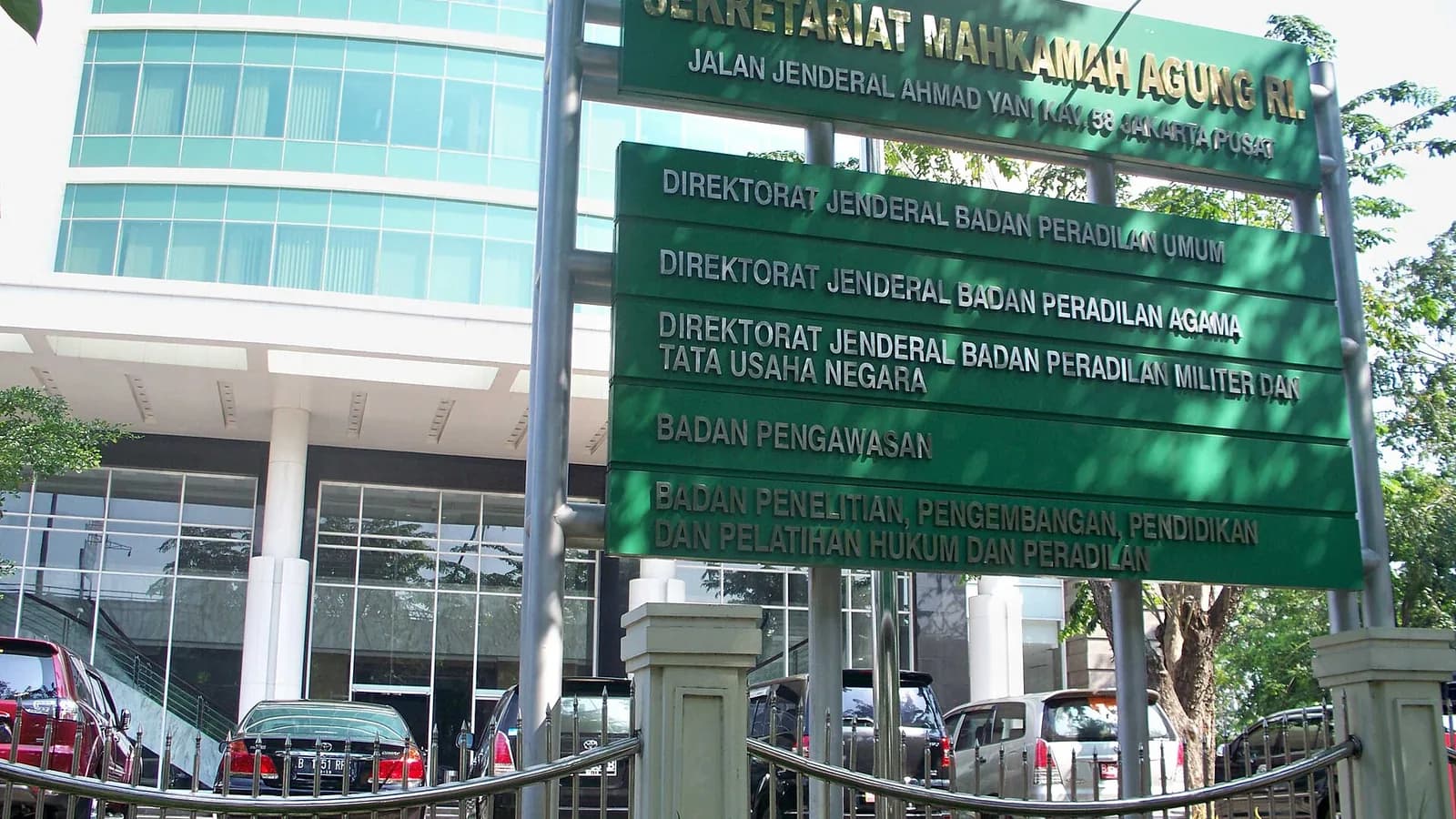
- Article 3 says that to enforce an ICSID award in Indonesia, a statement from the Supreme Court that the award is enforceable is required; the Supreme Court sends it, via the High Court, to the District Court where the award is to be executed.
Membership is not consent. ICSID only has jurisdiction over a particular dispute if Indonesia has consented to it, usually in an investment treaty or a contract.
Which treaties still apply
This is where the landscape changed most. UNCTAD's International Investment Agreements Navigator, read on 20–21 November 2026, lists 74 bilateral investment treaties for Indonesia: 28 in force, 32 terminated and 14 signed but not in force. Most of the terminations fall between 2014 and 2020. Selected entries:
| Treaty | Status (UNCTAD) | Key date |
|---|---|---|
| Indonesia–Netherlands BIT (1994) | Terminated | 30 Jun 2015 |
| China–Indonesia BIT (1994) | Terminated | 31 Mar 2015 |
| France–Indonesia BIT (1973) | Terminated | 29 Apr 2015 |
| Indonesia–United Kingdom BIT (1976) | Terminated | 23 Mar 2017 |
| Germany–Indonesia BIT (2003) | Terminated | 1 Jun 2017 |
| Australia–Indonesia BIT (1992) | Terminated | 6 Aug 2020 |
| Indonesia–Korea BIT (1991) | In force | since 10 Mar 1994 |
| Indonesia–Singapore BIT (2018) | In force | since 9 Mar 2021 |
| Indonesia–UAE BIT (2019) | In force | since 3 Dec 2021 |
| Indonesia–Switzerland BIT (2022) | In force | since 1 Aug 2024 |
| Indonesia–Timor-Leste BIT (2026) | Signed, not in force | signed 15 Oct 2026 |
Two cautions. First, UNCTAD notes that a treaty drops out of its count once termination takes effect, even if it still protects existing investments during its "survival" (sunset) period. A terminated BIT is therefore not automatically irrelevant to an investment made while it was in force; the treaty text decides. Second, the gap left by terminated BITs has partly been filled by investment chapters in trade agreements. UNCTAD lists 23 such treaties with investment provisions in force for Indonesia, including the ASEAN Comprehensive Investment Agreement (in force 24 February 2012), RCEP (1 January 2022), the Indonesia–Australia CEPA (5 July 2020), the Indonesia–Korea CEPA (1 January 2023), the Indonesia–UAE CEPA (1 September 2023) and the EFTA–Indonesia CEPA (1 November 2021). The Canada–Indonesia CEPA (signed 24 September 2025) and the Indonesia–United States agreement (signed 19 February 2026) are listed as signed, not in force. For the EU side, see our piece on [IEU-CEPA](/en/news/ieu-cepa-indonesia-eu-mining-investment).
These newer chapters are not old-style BITs. UNCTAD's mapping of the Indonesia–Australia CEPA, for example, records that investor-state dispute settlement is included, with forum options of Indonesian domestic courts, ICSID, UNCITRAL and others, but that it covers treaty claims only, excludes some policy areas, includes a "no U-turn" waiver between forums, a limitation period for bringing claims, and a special mechanism for taxation or prudential measures. Those limits matter when you model treaty protection for a mine.
4. What two public mining cases show
Both cases are on the public record at ICSID and in UNCTAD's dispute database.
Newmont's export-ban claim (ICSID ARB/14/15): filed, then withdrawn
ICSID received a request for arbitration from Nusa Tenggara Partnership B.V. and PT Newmont Nusa Tenggara on 30 June 2014 and registered it on 15 July 2014. UNCTAD records the treaty as the Indonesia–Netherlands BIT (1994) and the subject as the Batu Hijau copper-gold mine, operated under a Contract of Work, and claims arising out of copper export restrictions, including an export duty and a ban on exporting copper concentrate.
The government's response was organised by statute. Presidential Regulation No. 78 of 2014, signed on 24 July 2014, appointed the Coordinating Minister for Economic Affairs, the Ministers of Law and Human Rights, Finance, and Energy and Mineral Resources, the Attorney General and the head of BKPM as the Government's legal team. Its mandate covered both defending the ICSID claim and bringing Indonesia's own arbitration claim against PT Newmont Nusa Tenggara under the UNCITRAL Arbitration Rules.
On 25 August 2014, before a tribunal was constituted, the claimants asked to discontinue. Indonesia said it had no objection, and ICSID's Secretary-General took note of the discontinuance on 29 August 2014. No decision on the merits was made. (For the policy behind the claim, see [Indonesia's mineral export ban](/en/news/indonesia-mineral-export-ban).)
Churchill Mining and Planet Mining (ICSID ARB/12/14 and 12/40): due diligence decides
The second case is the one every buyer of an Indonesian mining asset should read. Churchill Mining PLC (UK) and Planet Mining Pty Ltd (Australia) brought claims under the UK–Indonesia BIT (1976) and the Australia–Indonesia BIT (1992) over the East Kutai Coal Project in East Kutai Regency, Kalimantan, after the licences were revoked in 2010. According to IISD's case summary, the requests were filed on 22 May 2012 and 26 November 2012, and the tribunal upheld jurisdiction on 24 February 2014.
The award of 6 December 2016 went the other way on the merits. IISD's summary records that the tribunal found the claims were "based on documents forged to implement a fraud aimed at obtaining mining rights" and declared all claims inadmissible. The tribunal pointed to the claimants' local partner as the likely source of the forgeries, but held that the claimants had failed to exercise sufficient due diligence into how the licences were obtained. italaw's case record shows the claimants were ordered to bear the tribunal's fees and ICSID's charges plus 75% of Indonesia's expenses.
The claimants applied for annulment. The ad hoc committee's Decision on Annulment, dispatched on 18 March 2019, dismissed the application in its entirety and lifted the stay of enforcement.
The lesson is concrete: treaty protection only covers an investment whose title is real. If the underlying permit is defective, a treaty claim can fail before damages are even discussed. That is why permit verification sits at the front of any acquisition, as covered in [how to buy a mine in Indonesia](/en/news/how-to-buy-a-mine-in-indonesia) and [foreign ownership rules](/en/news/foreign-ownership-indonesian-mining).
Catatan Teramine
*This section is Teramine's editorial analysis, not a statement of fact.*
- Decide the forum at signing, not at default. For contracts, the choice is yours: an arbitration clause with a seat in a New York Convention country, Indonesian translations planned for, and an exequatur at Central Jakarta as the end point. Without a clause, Article 3 of Law 30/1999 does not apply and you are in the District Court.
- Separate the permit from the investment. Article 154 of the mining law keeps permit-implementation disputes at home. Treaty and contract protection is about the investment and the investor's dealings with the state. Structure and documents should make that line clear.
- Map your treaty before you map your structure. With 32 BITs terminated, the old habit of routing through the Netherlands or another hub no longer gives the protection it once did. Check the in-force treaty or trade-agreement chapter that actually covers your holding company, and read its exclusions, such as treaty-claims-only scope, carved-out policy areas, limitation periods and tax filters.
- Churchill is the real risk lesson. Indonesia's most-cited mining arbitration was not lost on regulatory grounds. It was lost on title. Spending money on verifying permits, signatures and the registry trail is the cheapest form of dispute protection there is.
If you are assessing a specific concession, Teramine's [permit services](/en/layanan-izin) cover permit and status verification, and current assets are listed on the [marketplace](/en/marketplace).
What this article does not cover
- Job Creation Law amendments to the mining law were not reviewed for Article 154.
- Treaty texts were not read clause by clause. The ISDS features above come from UNCTAD's mapping of the Indonesia–Australia CEPA, not from the treaty itself. Read the specific treaty before relying on it.
- Sunset periods of individual terminated BITs were not checked.
- BANI (Indonesia's national arbitration board) rules and fees were not reviewed for this piece.
Sources read for this article
- Law No. 25 of 2007 on Investment: Arts. 5, 7, 32.
- Law No. 4 of 2009 on Mineral and Coal Mining: Art. 154; amending Law No. 3 of 2020 and Law No. 2 of 2025, checked for changes to Art. 154.
- Law No. 30 of 1999 on Arbitration and ADR: Arts. 1(9), 3, 5, 6, 60, 66–68, 70–71 and elucidation to Art. 66.
- Presidential Decree No. 34 of 1981, accession to the New York Convention.
- Law No. 5 of 1968, approving the ICSID Convention: Arts. 2–3.
- Presidential Regulation No. 78 of 2014, Government legal team for the Newmont ICSID claim and UNCITRAL counter-claim.
- ICSID: Order taking note of discontinuance, ARB/14/15, 29 August 2014; Decision on Annulment, ARB/12/14 and 12/40, 18 March 2019.
- UNCTAD: IIA Navigator (Indonesia country page; Indonesia–Australia CEPA mapping); Investment Dispute Settlement Navigator (Nusa Tenggara v. Indonesia).
- italaw case page and IISD Investment Treaty News case summary for Churchill Mining v. Indonesia.