A royalty on Indonesian mineral and coal production is not paid under a tax law. It is paid as PNBP — *Penerimaan Negara Bukan Pajak*, non-tax state revenue — collected by the Ministry of Energy and Mineral Resources (ESDM) and deposited into the state treasury. The rulebook that sets the types and the tariffs is Government Regulation No. 19 of 2025, signed and promulgated on 11 April 2025, in force 15 days later, and it revoked the previous regulation, PP No. 26 of 2022.
The ministry's own reporting gives the scale. Sub-sector PNBP from mineral and coal was Rp135.16 trillion in 2025 and Rp108.13 trillion up to August 2026. Over the same period the sub-sector recorded USD6.7 billion of investment in 2025 and a workforce of 685,724 as at the first half of 2026.
This article sets out the framework as written, then what the government says about it. One deliberate limit: we print no royalty rate percentage. The copy of PP 19/2025 we read is the official scanned copy, and several cells of its rate annex are illegible — digits are missing. We will not guess a statutory rate. The reason is set out in full at the end.
Where a royalty sits in the law
Article 1(1) of PP 19/2025 lists five sources of PNBP at the ministry:
- the utilisation of natural resources — this is where mineral and coal royalties sit;
- services in energy and mineral resources;
- the use of facilities and infrastructure within the ministry's functions;
- administrative fines; and
- the placement of guarantees in the energy and mineral resources field.
Only the first carries a production royalty. The others are charges for services, penalties, or money held against an obligation rather than revenue earned — Article 1(4) makes the point explicit: a guarantee is charged as PNBP on a business's non-compliance with the rules, not as a fee for a service.
Two articles govern how the money moves. Article 7 requires all PNBP at the ministry to be paid into the state treasury. Article 8 leaves the mechanics — how a charge is imposed, calculated, paid and deposited — to a ministerial regulation made under the law on PNBP management.
What a mineral and coal holder actually pays
The annex to PP 19/2025 is organised by commodity. Read against the mineral and coal section, the recurring charges are these:
| Charge | Basis in the annex | How it is expressed |
|---|---|---|
| Iuran tetap — exploration IUP and IUPK, metal minerals, coal and diamonds | flat annual land rent | Rp30,000 per hectare per year |
| Iuran tetap — operating-production IUP and IUPK | flat annual land rent | Rp60,000 per hectare per year |
| Iuran produksi (royalty) — coal, open pit and underground | per tonne | a percentage of price, tiered by calorific value and by the coal price benchmark band |
| Iuran produksi (royalty) — metal minerals | per tonne | a percentage of price, tiered by how far the product has been processed |
| Iuran produksi (royalty) — nickel ore | per tonne | a percentage of price, tiered by price band |
| Central government share — IUPK and IUPK as a continuation of a contract | share of profit | 4 per cent of net profit, for metal minerals and coal, charged from production onwards |
Three features of that table matter more than any single figure in it.
The royalty base is a benchmark price, not an invoice. For coal the annex keys the bands to the Harga Batubara Acuan (HBA), the government's own reference price for coal. A royalty expressed as a percentage of a reference price is exposed to a number set by regulation, not only to the price a producer negotiates.
The rate falls as the product is upgraded. In the metal minerals section the annex applies its highest rate to ore and its lowest to refined metal — for iron, the sequence runs from iron ore, down through concentrate and pellet, to sponge iron, pig iron and iron alloy. Read as a fiscal instrument, the tariff schedule is a second implementation of *hilirisasi*, the downstreaming policy, alongside the export rules that force processing onshore. The same shape governs nickel: ore carries the highest rates and nickel pig iron and nickel matte lower ones.
The 4 per cent share is not a royalty and not universal. Article 2(1)(a) applies it to IUPK holders and to IUPK holders continuing an operating contract or agreement for metal minerals and coal. It is a share of net profit, charged from production onwards, and it sits beside the royalty rather than replacing it.
The annex also carries the penalties. Among them is a compensation formula for a coal producer that does not meet its domestic market obligation — a tariff in US dollars per tonne, keyed to coal quality and to movements in the HBA, multiplied by the shortfall in tonnes against the obligation. A separate administrative fine attaches to late construction of a domestic metal refining facility.
Two ways the number can come down
PP 19/2025 does not only set charges. It also creates two paths by which they can be reduced, and both are discretionary rather than automatic.
Article 3 — coal value addition. An operating-production IUP or IUPK holder, or an IUPK as a continuation of a contract, that carries out coal value-addition activity may be given a specified treatment in the form of a zero royalty on coal volume, weighing energy self-sufficiency and the supply of industrial feedstock. The activity, the size of the facility and the terms are set by a ministerial regulation, and the size, conditions and procedure must first be approved by the Minister of Finance.
Article 5(1) — a general tariff floor. With certain considerations, the tariff for the PNBP types in Article 1(1)(a) through (e) may be set down to Rp0.00 or 0 per cent. This too runs through a ministerial regulation with prior approval from the Minister of Finance.
For an investor the distinction is the point. The statutory charge is knowable from the annex. The relief is not — it is an administrative decision, taken commodity by commodity, with the finance ministry in the loop.
What the government reports
The figures below come from a ministry release dated 21 September 2026, drawn from the Directorate General of Mineral and Coal's own data.
| Indicator | Figure | Period |
|---|---|---|
| PNBP, mineral and coal sub-sector | Rp135.16 trillion | full-year 2025 |
| PNBP, mineral and coal sub-sector | Rp108.13 trillion | up to August 2026 |
| Investment, mineral and coal sub-sector | USD6.7 billion | 2025 |
| Workforce, mineral and coal sub-sector | 685,724 | first half of 2026 |
Both PNBP figures are sub-sector aggregates. The release gives no company-level or commodity-level breakdown, and no full-year 2026 figure.
Why revenue can rise while output falls
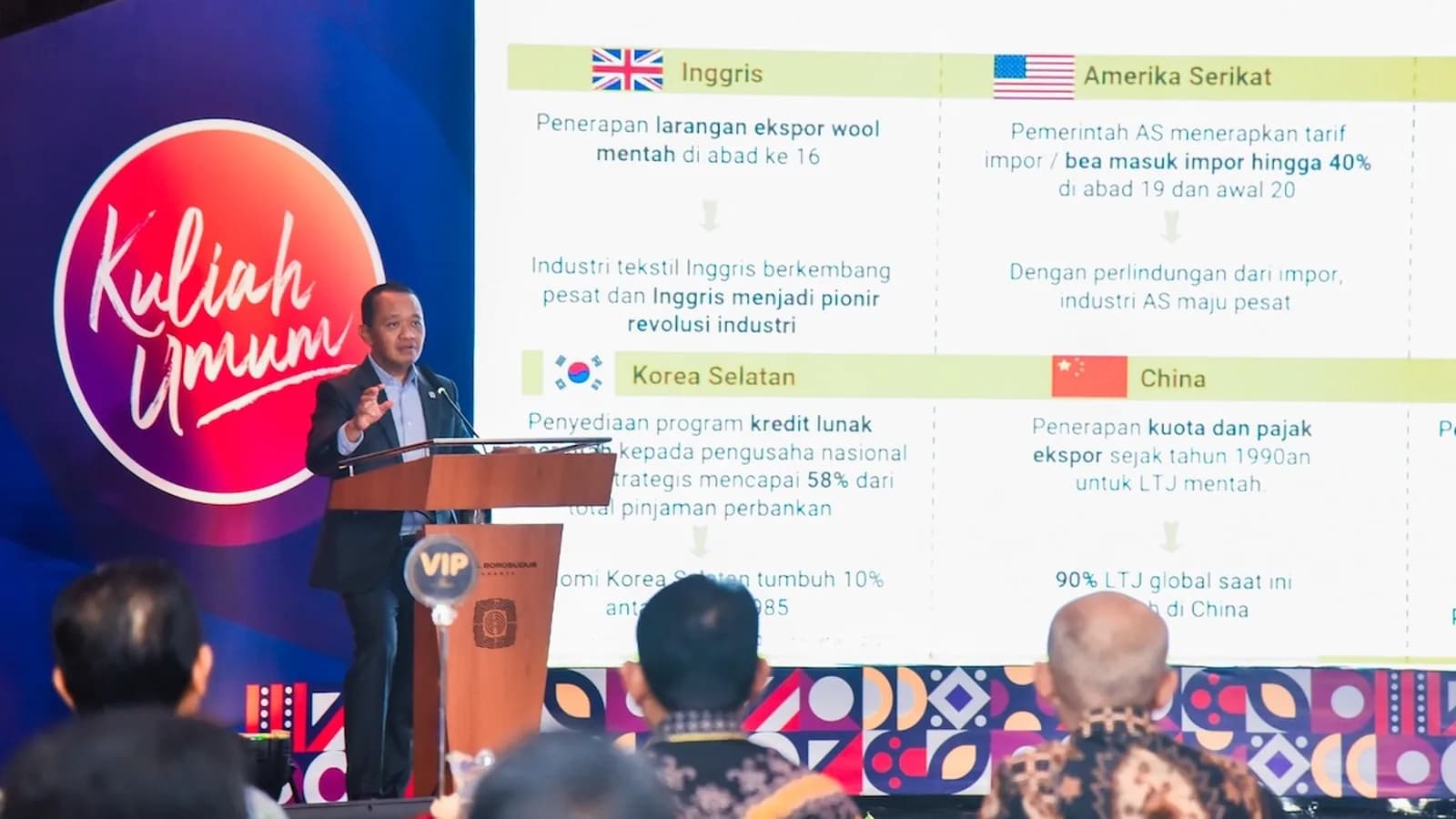
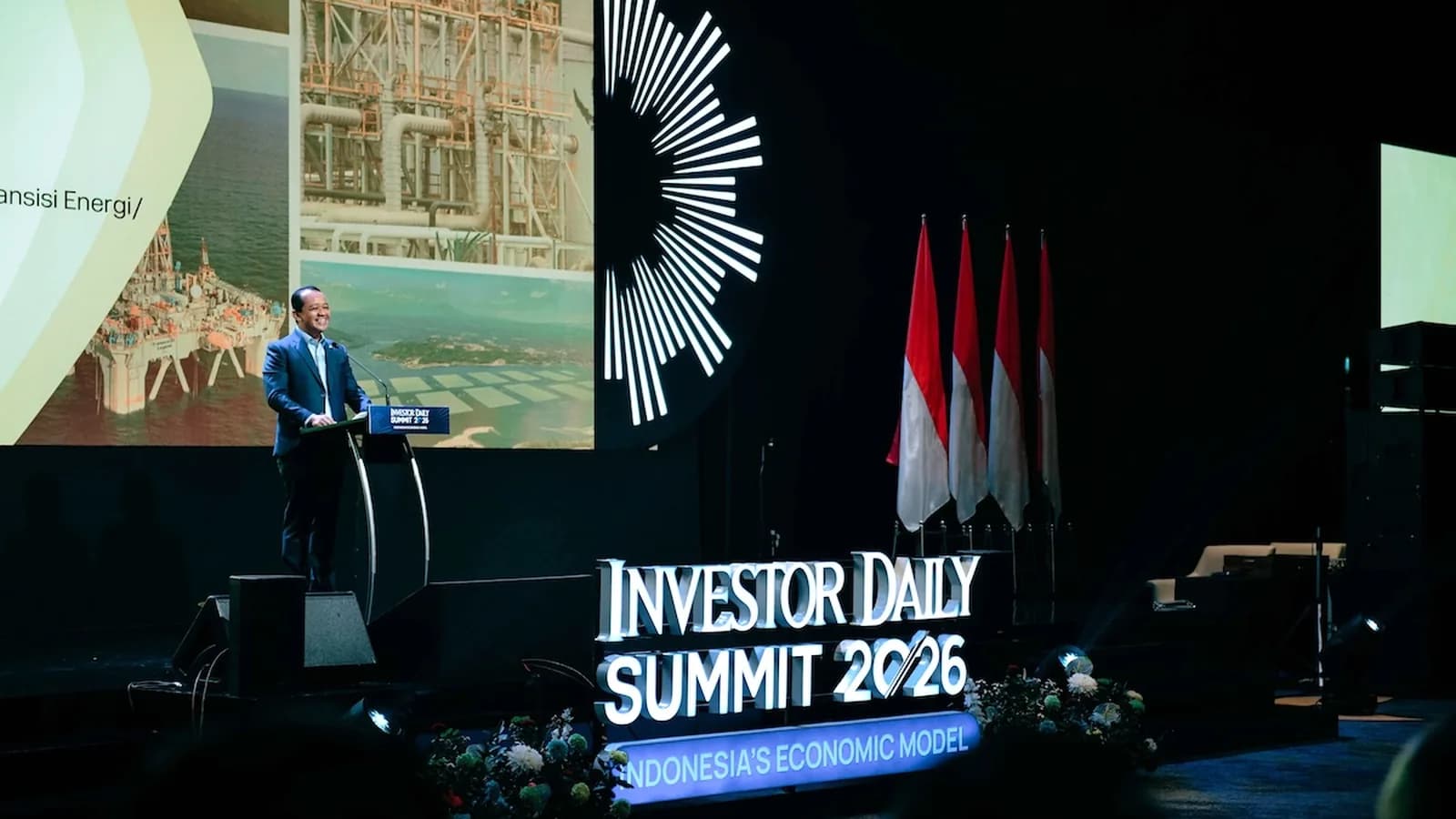
The ministry's release states the relationship directly. According to Minister of Energy and Mineral Resources Bahlil Lahadalia, the directorate general reported that coal production has not been as high as in 2025, while the PNBP collected is higher than in that period:
FAKTA"Laporan dari Dirjen Minerba kepada saya, produksi batu bara itu tidak sebanyak di tahun 2025, tetapi PNBP-nya lebih tinggi dibandingkan dengan 2025. Artinya, kita ingin produksinya tidak terlalu banyak, tapi pendapatan negara itu yang paling penting." Translation: the report from the Director General of Mineral and Coal is that coal production is not as much as in 2025, but PNBP is higher than in 2025. The intent, he said, is for production not to be too large, with state revenue being the most important thing.
The same release records his assessment that governing supply and demand has improved conditions in Indonesia's two main commodities: "Alhamdulillah, dengan penataan terhadap pengaturan supply and demand, harga batu bara dan nikel Indonesia sekarang sudah lebih baik."
That statement sits at the end of a sequence the ministry has itself described. On 23 December 2025 the government announced a production cut. At a ministry event on 12 February 2026, Director General of Mineral and Coal Tri Winarno described the market reaction, saying the nickel price had been Rp14,800 during oversupply, had peaked at Rp18,800, and by then stood at around Rp17,000. In the same appearance the Minister explained the 2026 work-plan and budget (RKAB) adjustment as a supply-demand alignment intended to keep prices stable and to preserve reserves for future generations.
The volume control and the revenue collection therefore run through the same instrument. The RKAB is where approved production volume is decided — our explainer on [what the RKAB is](/en/news/what-is-rkab-indonesia) covers how the document is prepared and approved, and the release records that strengthening the RKAB arrangement is part of the governance reform.
What this means if you are underwriting a project
Read as a diligence list rather than a news story, the framework narrows to five questions.
- Which instrument do you hold? The 4 per cent net-profit share is written for IUPK holders and IUPK continuation holders. The permit instrument is not a formality — see our comparison of [IUP and IUPK](/en/news/iup-vs-iupk) for how the two differ.
- What is the reference price, and who sets it? For coal the annex is keyed to the HBA. Model the regulatory benchmark, not the spot sale.
- At which stage does your product leave the country? The rate steps down as the product is processed. A project that refines onshore sits in a different part of the annex than one that ships ore.
- Are you relying on relief? The zero-royalty treatment for coal value addition and the general floor in Article 5(1) are both discretionary and both require the Minister of Finance. They are not an entitlement to model.
- What else is a PNBP? Guarantees are charged as PNBP on non-compliance, which means a reclamation or post-mining guarantee is not only an environmental liability but a cash obligation on this same schedule — set out in our piece on [mine closure in Indonesia](/en/news/mine-closure-in-indonesia). The downstreaming rules that now shape where processing happens are covered in our explainer on the [mineral export ban](/en/news/indonesia-mineral-export-ban).
For permit, document and compliance work under this framework, see our [permit services](/en/layanan-izin) page. For mining assets currently listed, see the [mining marketplace](/en/marketplace).
Catatan Teramine
*This section is Teramine's editorial assessment, not a statement of fact from any source.*
The first observation is structural. Because the royalty is expressed as a percentage of a price benchmark rather than a fixed sum per tonne, a smaller volume sold into a stronger market can produce a larger payment. That is not a policy goal invented in Jakarta; it is arithmetic built into the tariff's design, and it means the government's claim that receipts rose while coal output fell is not, on its face, a contradiction. It is what a price-linked royalty does when prices improve.
The second is that the state has now said out loud what the priority order is. If receipts matter more than tonnage, then the RKAB is a revenue instrument as much as an environmental or technical one — and a producer's approved volume is the variable the state will move first.
The third is about what an investor should treat as fixed. In our reading, the two reduction paths in Articles 3 and 5 are the less bankable parts of this regulation, precisely because both end at the Minister of Finance. A feasibility study should carry the annex rate; the relief is upside that has to be applied for.
We would add one caution about the numbers themselves. Both PNBP figures are sub-sector totals published by the same ministry that collects them, and the release gives no audit opinion, no commodity split and no company-level detail. They tell you the direction and the order of magnitude of sub-sector receipts. They do not tell you what any named company pays.
What we could not verify
- The royalty rate table. PP 19/2025 was read from the official scanned copy published on the ministry's legal database. The tariff columns in the annex are partly illegible in that copy — in several cells digits are missing, including cells in the coal, nickel and refined-product rows. Where a figure read unambiguously we have stated it. Where it did not, we have stated no figure and described the structure instead. No royalty percentage in this article is a rate; the tariff matrix itself should be checked against the official annex before it is relied on.
- Any implementing ministerial regulation under Articles 3, 5 or 8 of PP 19/2025 — whether one has been issued, in what terms, and what rates or relief it sets. None was read for this article, so none is described.
- A commodity-level or company-level PNBP split. The 21 September 2026 release gives sub-sector aggregates only.
- The composition of the 2025 figure, and any explanation of how much of the 2026 figure came from coal against nickel or other minerals.
- A full-year 2026 figure, and any official projection of one.
- Any figure for the value of guarantees held by the state under the fifth PNBP group.
Sources
The regulatory text is Government Regulation No. 19 of 2025, read from the official copy on the JDIH Kementerian ESDM legal database, together with that database's record for the regulation, which shows its status as in force and its revocation of PP No. 26 of 2022. The reported figures and the statements attributed to the Minister and the Director General of Mineral and Coal are from two ministry releases, of 21 September 2026 and 13 February 2026. Nothing in this article — no figure, quotation, company name or rate — appears here that is not in one of those documents.