Indonesian coal is a sector in the middle of a deliberate reversal. After setting production records for three consecutive years, the government is now restricting output by quota — and reporting more revenue from less coal.
The Scale
Indonesia produced 835 million tonnes of coal in 2024, and the government set a more conservative target of 740 million tonnes for 2025, according to S&P Global. Reporting on ESDM's planning puts the 2026 figure potentially below 700 million tonnes.
On the export side, Indonesia shipped 285.23 million tonnes between January and September 2025, down 4.74% from 299.41 million tonnes in the same period a year earlier, according to Statistics Indonesia (BPS) data.
The country is the world's largest thermal coal exporter, which is why its domestic production policy is read as a global market signal rather than a national accounting matter.
The Policy Shift: Revenue Over Volume
The instrument is the RKAB — the annual Work Plan and Budget every permit holder must have approved before producing. Tightening RKAB approval is how the government controls volume.
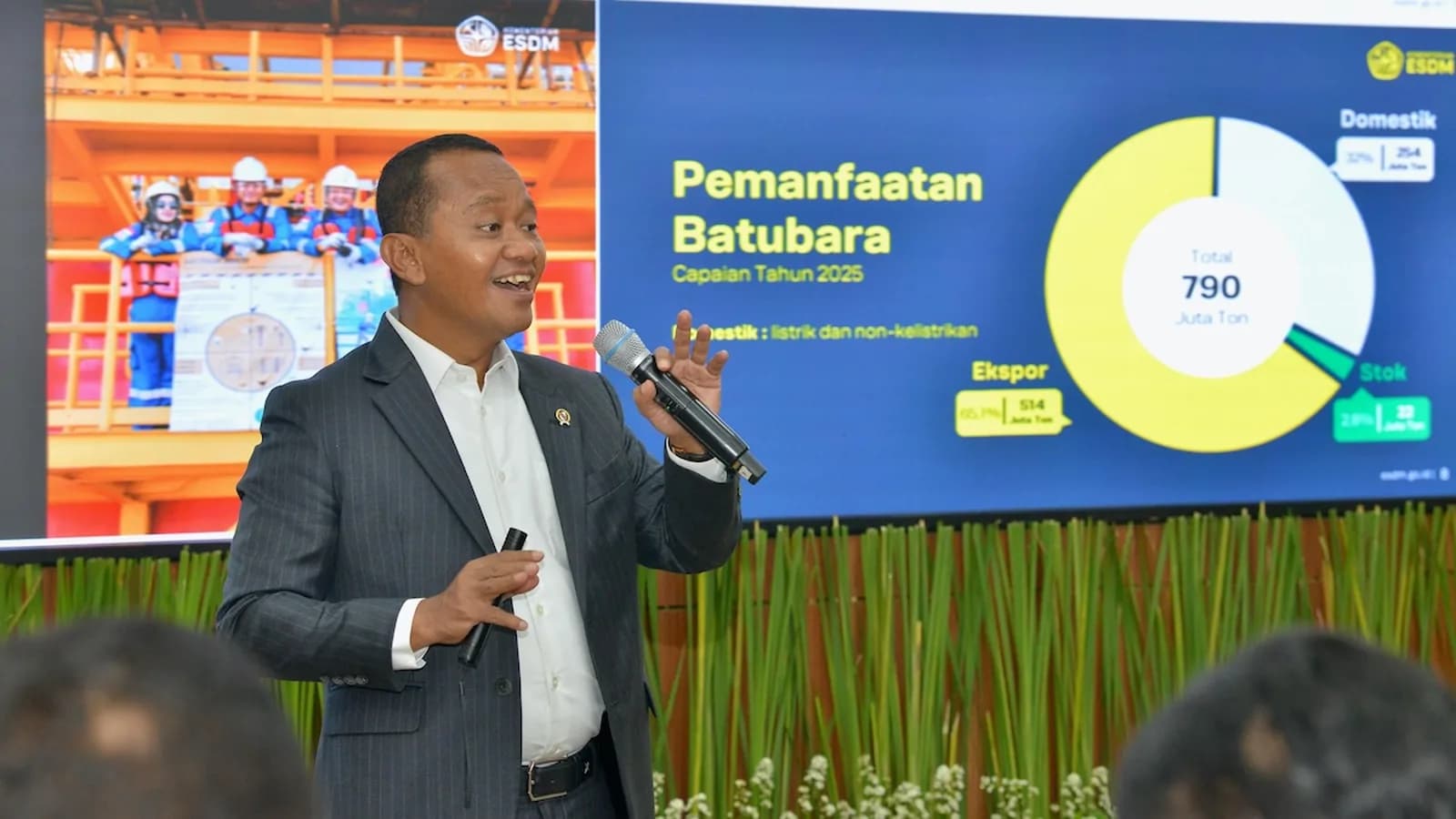
In September 2026 the Ministry of Energy and Mineral Resources reported the result plainly. Minister Bahlil Lahadalia:
"Laporan dari Dirjen Minerba kepada saya, produksi batu bara itu tidak sebanyak di tahun 2025, tetapi PNBP-nya lebih tinggi dibandingkan dengan 2025."
Coal production below the prior year; state revenue above it. The ministry's own sub-sector figures: Rp108.13 trillion in non-tax state revenue up to August 2026, against Rp135.16 trillion for the whole of 2025; investment of USD 6.7 billion in 2025; and 685,724 workers in the first half of 2026.
The stated purpose, from the ministry's earlier release, is to align supply with demand: *"Kenapa RKAB kita potong? karena kita menyesuaikan antara supply dengan demand."*
What This Means for a Coal Permit Holder
- Your RKAB is your production licence in practice. If the government controls volume through RKAB approval, the approved plan is the ceiling you operate under — not an administrative filing made after the real decision.
- Quota relief is unlikely to be the direction of travel. The ministry frames the policy as supply-demand alignment and reserve preservation for future generations, not expansion.
- Revenue per tonne is the metric now. If national revenue rises while tonnage falls, the policy is working as designed — a producer's own economics need to survive the same shift.
- Coal still sits inside the domestic-processing agenda. Downstreaming and Good Mining Practices are named as the sector's direction alongside the quota regime.
Who Produces Indonesian Coal
The state holding Mining Industry Indonesia (MIND ID) includes PT Bukit Asam Tbk, the state coal producer, alongside PT Antam, PT Freeport Indonesia, PT Inalum and PT Timah. Private and foreign-owned producers operate the rest of the sector.
Coal is governed by the same statute as minerals: Law No. 4/2009 and amendment Law No. 3/2020, administered by the Directorate General of Mineral and Coal.
Catatan Teramine
This section is Teramine's editorial assessment, not a government statement.
Our read is that the decisive change is not the tonnage figure but the objective: the sector is now managed for revenue and reserve life rather than output growth. For a permit holder, that makes RKAB quality — the strength of the reserve basis and the production plan inside it — the single most consequential document in the business.
Coal assets currently listed on Teramine are on the [mining marketplace](/en/marketplace). For RKAB preparation, revision or quota adjustment work, see [mining permit services](/en/layanan-izin).
Sources
Production targets and export volumes are attributed to the outlets named above, which cite Indonesian government data. The revenue, investment and employment figures, and the ministerial quotations, are from the Ministry of Energy and Mineral Resources' own releases.