Indonesia's copper sector is now two stories moving in opposite directions. The U.S. Geological Survey estimates the country's mine output at 710,000 tonnes of copper content in 2025, down from 1,010,000 tonnes in 2024 — while its refinery output is estimated to have risen to 400,000 tonnes, from 349,000 tonnes the year before.
Indonesia holds about 21 million tonnes of copper reserves, and copper concentrates were worth $8.0 billion of its 2024 exports. What follows is where that metal comes from, what is being built to process it, and how the export position is governed — the three questions a foreign investor actually has to answer before touching an Indonesian copper asset.
Indonesian Copper Output: The Five-Year Curve
USGS's Indonesia country profile, which reports data through January 2026, gives five years of mined copper output and smelter production:
| Year | Copper mine output, Cu content (t) | Primary smelter output (t) |
|---|---|---|
| 2020 | 500,000 | 276,900 |
| 2021 | 712,000 | 280,400 |
| 2022 | 921,000 | 316,700 |
| 2023 | 894,000 | 251,300 |
| 2024 | 996,000 | 398,200 |
Two things sit inside that table. Mined output roughly doubled between 2020 and 2024. And in 2024 smelter output jumped — the year the processing build-out started to show in the statistics.
The Mineral Commodity Summaries 2026 rounds Indonesia's 2024 mine output to 1,010,000 tonnes and puts the 2025 estimate at 710,000 tonnes. Both publications are USGS and both figures are estimates; the difference between them for the same year is a reminder to treat any single number as a rounding, not a measurement.
Where the Copper Comes From
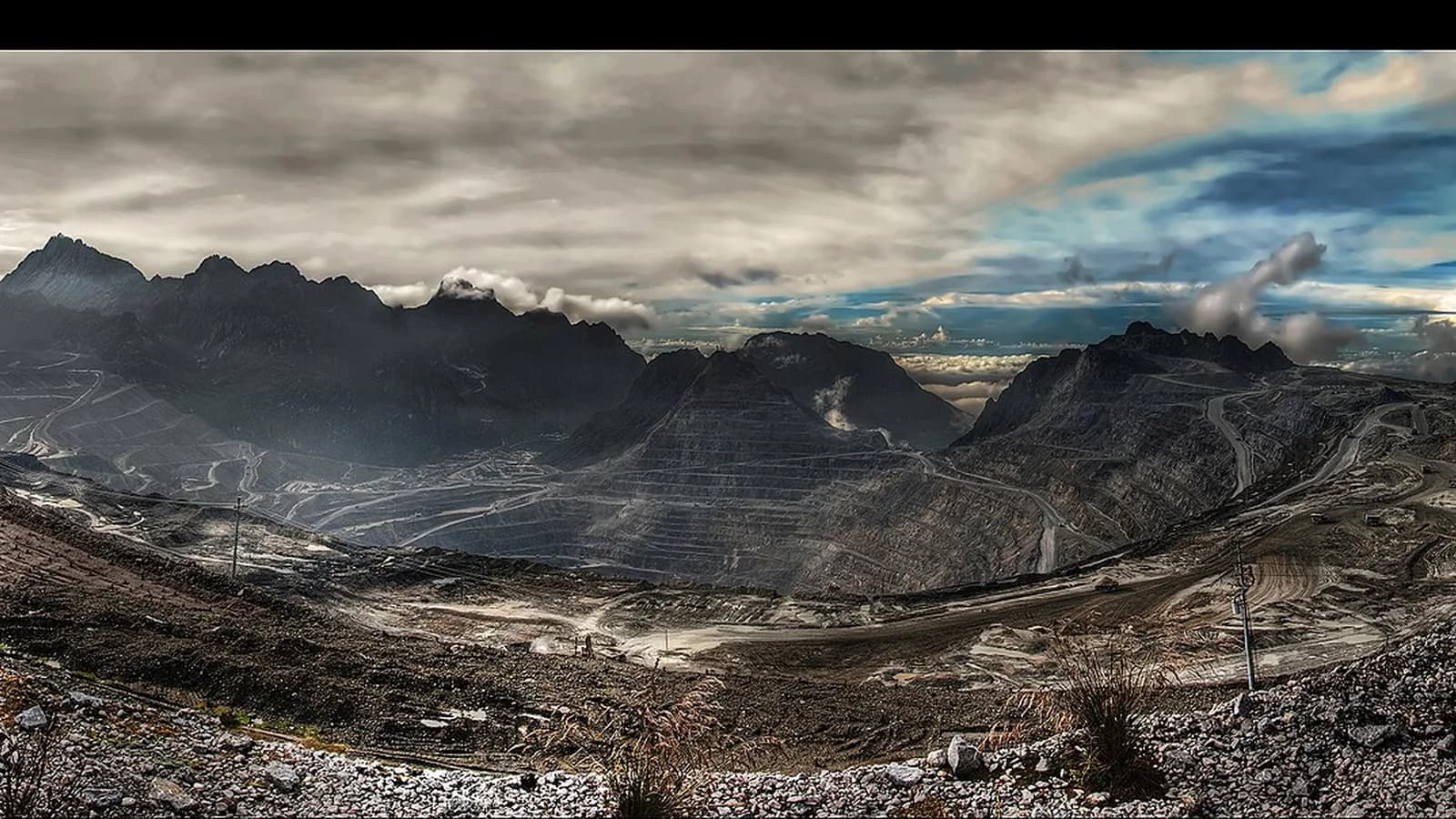
USGS attributes Indonesian copper and gold production to PT Freeport Indonesia (PT–FI), which it describes as operating one of the world's top-producing copper-gold mines, in Papua Province. PT–FI's copper output rose to 816,000 tonnes in 2024 from 753,000 tonnes in 2023, on higher mining and milling rates and ore grades that improved to 1.27% copper from 1.22%.
The second company USGS names in a copper context is PT Amman Mineral Nusa Tenggara.
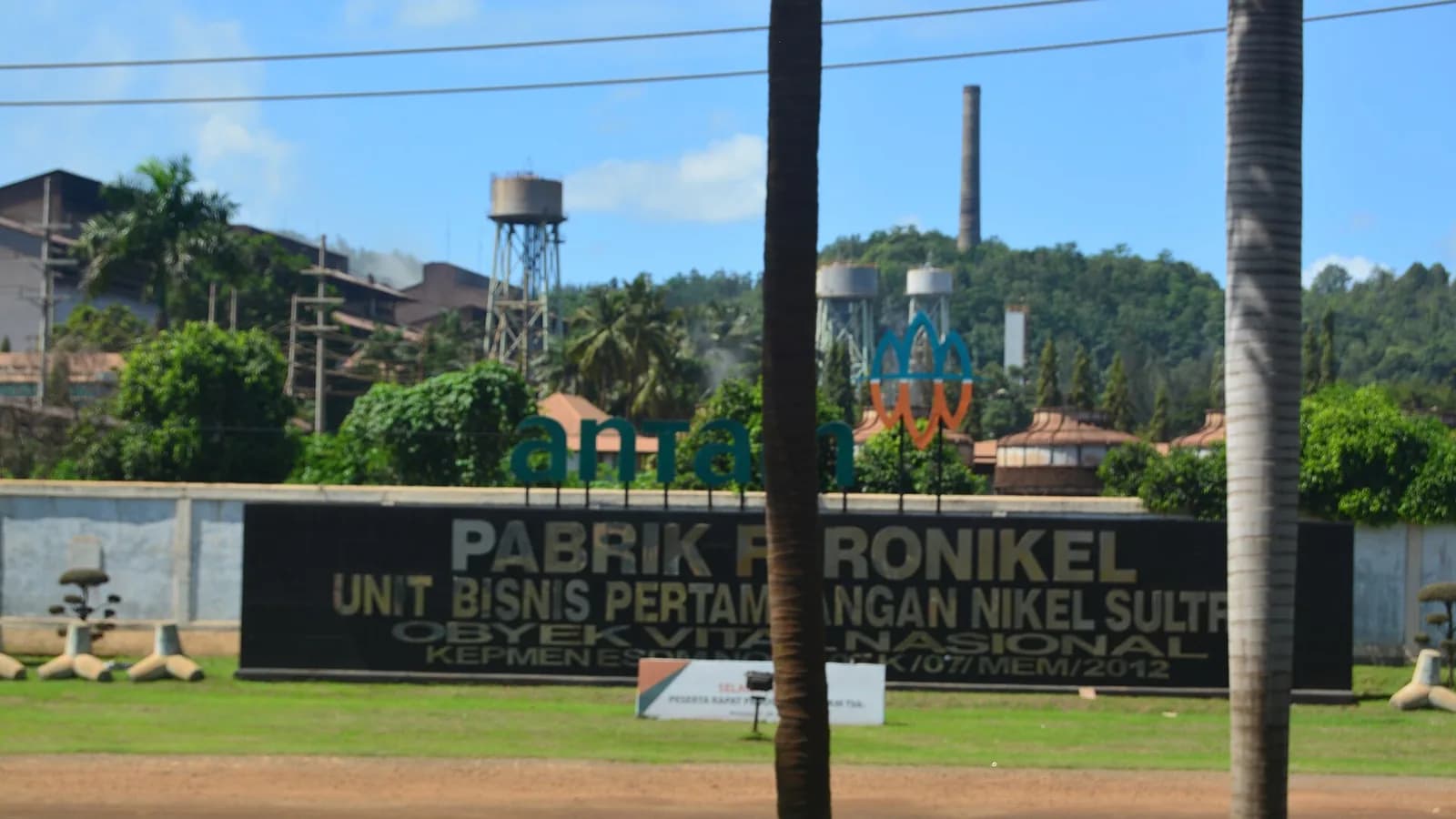
Ownership is layered. PT–FI sits inside Mining Industry Indonesia (MIND ID), the state holding that groups five companies: PT Antam, PT Freeport Indonesia, PT Inalum, PT Bukit Asam and PT Timah. USGS classifies PT–FI and PT Vale Indonesia as partially foreign-owned, and names PT Huafei Nickel Cobalt and PT Tsingshan Steel Indonesia as wholly foreign-owned.
Processing: The Smelter Is the Pivot
PT–FI completed its Manyar copper smelter in Gresik, East Java, in 2024, with 0.6 million tonnes per year of smelting capacity. Operations were suspended after a fire during startup in October that year; USGS records the repair as scheduled for completion by mid-2025.
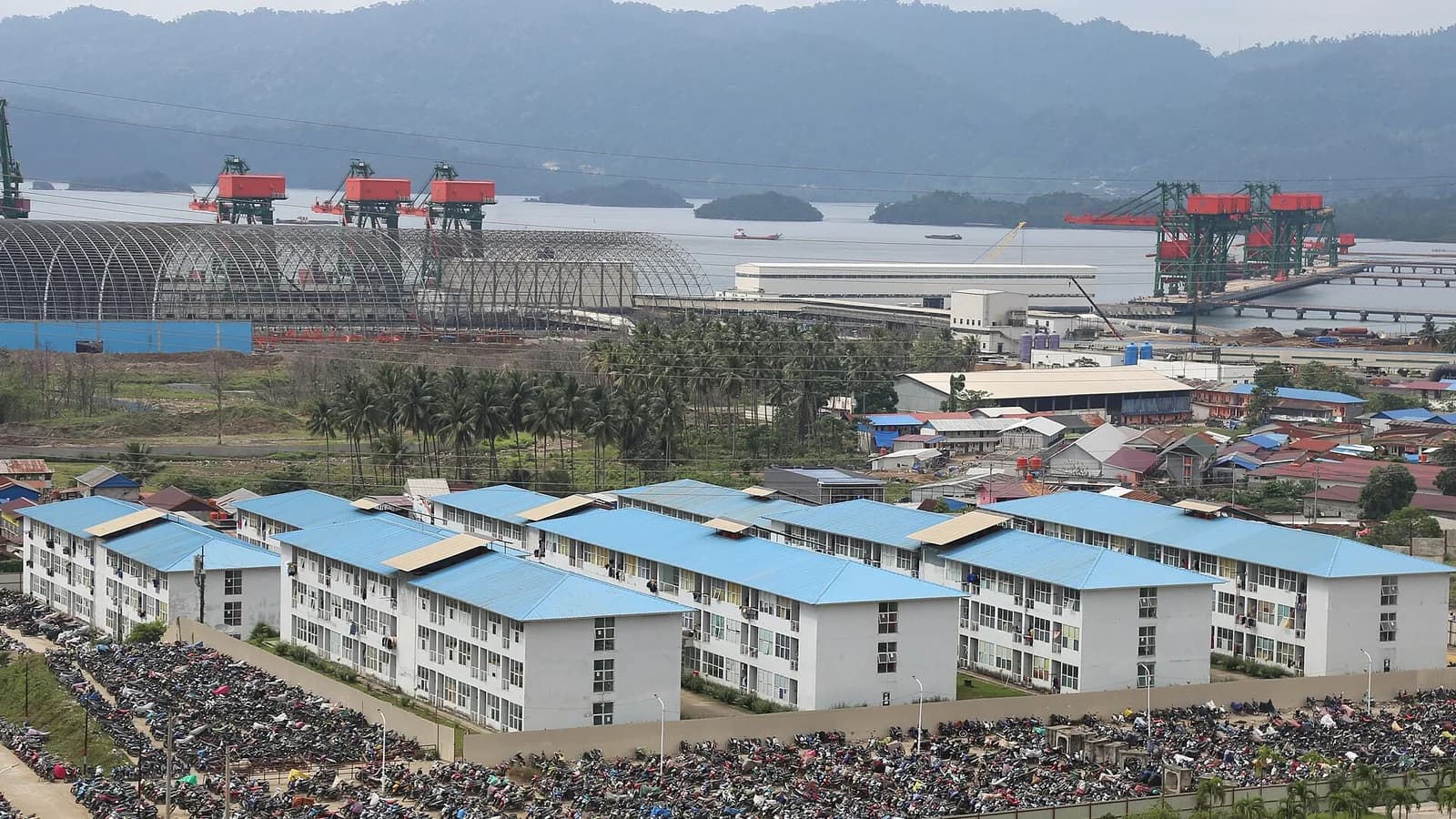
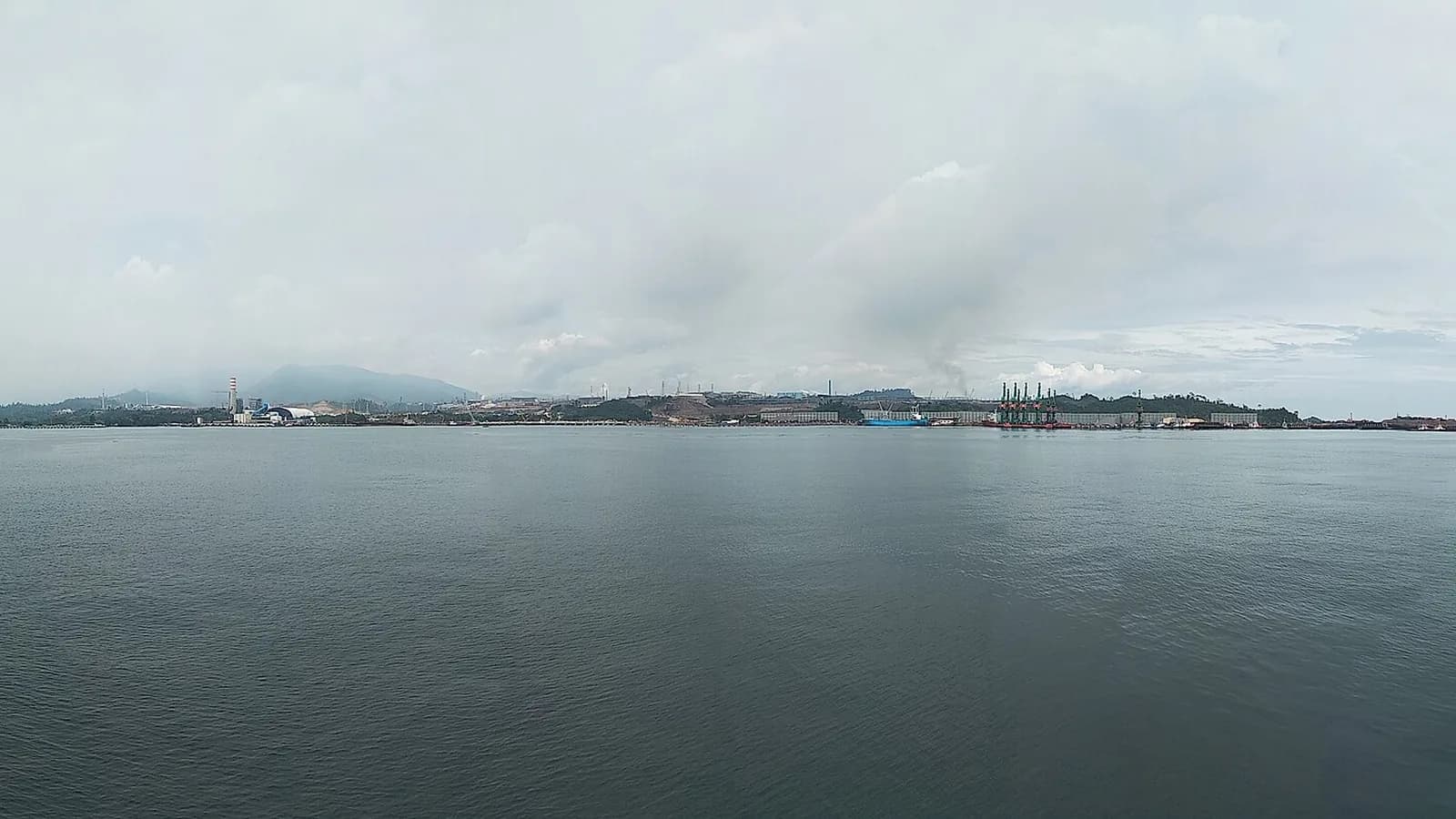
That facility matters more than its tonnage suggests. Indonesia has spent years pushing mineral processing onshore — the nickel ore export ban came in 2020 and the bauxite ban in 2023 — and a smelter is what turns a concentrate exporter into a metal producer. Smelter output already moved: from 251,300 tonnes in 2023 to 398,200 tonnes in 2024.
The Export Position, and Why Copper Is Different
In 2024 Indonesia exported $265 billion of goods in total. The category USGS labels metallic ores, slag and ash was worth $8.2 billion, with China taking 34% of it. Within that category, copper concentrates alone accounted for $8.0 billion — in practice, the whole of Indonesia's metallic-ore export earnings.
For scale, the same source puts nickel pig iron and ferronickel exports at $14.1 billion. Processed nickel, not ore.
Copper has been handled differently from nickel and bauxite. Those bans were imposed to force domestic plants into existence; on copper, the ministry kept concentrates moving while smelters were late. USGS states that PT–FI and PT Amman Mineral Nusa Tenggara were granted licences to continue exporting copper concentrates through 2024 owing to delayed smelter construction.
The instrument was Permen ESDM No. 6 of 2024, promulgated on 30 May 2024, which gave businesses that had reached the commissioning stage of a smelter build additional time to export concentrate and anode slime, to 31 December 2024. In the ministry's own release:
"Aturan ini memberikan kesempatan bagi badan usaha yang telah memasuki tahap commissioning pada pembangunan fasilitas pemurnian atau smelter untuk mengekspor lumpur anoda dan konsentrat hasil pengolahan, hingga 31 Desember 2024 mendatang."
That is Indonesian. In substance, the rule gives operations in the commissioning stage of a smelter build the chance to export anode slime and processed concentrate until 31 December 2024. The speaker was Agus Cahyono Adi, head of the ministry's communication and public information bureau, who added that the extension carried an export levy. The release states the scope: copper, iron, lead and zinc concentrates and anode slime, from holders of an IUP or an IUPK, to be followed by a trade ministry regulation on export administration and a finance ministry regulation setting the levy.
Copper's commercial status changed in Washington as well. On 7 November 2025 the United States published its Final 2025 List of Critical Minerals in the Federal Register (90 FR 50494), adding copper along with lead, potash, rhenium, silicon and silver.
The Legal Frame
Mineral and coal mining in Indonesia is governed by Law No. 4/2009 and its amendment Law No. 3/2020, administered by the Directorate General of Mineral and Coal at the Ministry of Energy and Mineral Resources. A copper project's identity is its permit: the commodity it names, the stage, the holder, the expiry date, and whether a divestment obligation attaches to that holding.
What This Means for an Investor
- Mine output and refined output now diverge. USGS estimates a large fall in mined copper for 2025 while refinery output rises. Neither publication read for this article states a cause, so treat the 2025 mine figure as an estimate rather than an established trend.
- The processing route decides export rights. Concentrate exports have run on time-limited permissions tied to smelter construction progress, not on a permanent entitlement. A project with no processing path sits on the wrong side of that policy.
- Reserves are not the constraint. Indonesia's 21 million tonnes of copper reserves compare with Chile's 180 million tonnes and Peru's 85 million tonnes in the same USGS table. Indonesia matters here for processing capacity and export flow more than for deposit size.
- Price context. The LME grade A cash price averaged 414.7 cents per pound in 2024 and was projected to average 440 cents per pound in 2025, per the same USGS summary.
- Copper is now a listed critical mineral in the United States. That shapes offtake, financing and contract narratives in the American market specifically.
Catatan Teramine
This section is Teramine's editorial assessment, not a statement from USGS or the Ministry of Energy and Mineral Resources.
The pattern in the data is that Indonesia's copper story has migrated from the pit to the smelter. Mined output is estimated to have fallen in 2025 while refining rose; the export right is conditional on building processing; and copper's new status as a US critical mineral pulls the metal into a different financing conversation. For an investor, the decisive questions are consequently not geological: is there a processing route, is the permit current, and what does the export entitlement allow this year.
One calculation of ours: Indonesia's estimated 710,000 tonnes of 2025 mine output is roughly 3% of the 23-million-tonne world total USGS reports for the year, against about 4.4% in 2024. That is arithmetic on two sourced figures, not a USGS statement, and it rests on an estimate.
Copper and polymetallic opportunities currently listed on Teramine are on the [mining marketplace](/en/marketplace). For permit, RKAB or export-administration work on an existing project, see [mining permit services](/en/layanan-izin). The gold side of the same Grasberg system is covered in [Gold Mining in Indonesia](/en/news/gold-mining-in-indonesia).
Sources
Figures and quotations in this article come from the three official sources listed below.