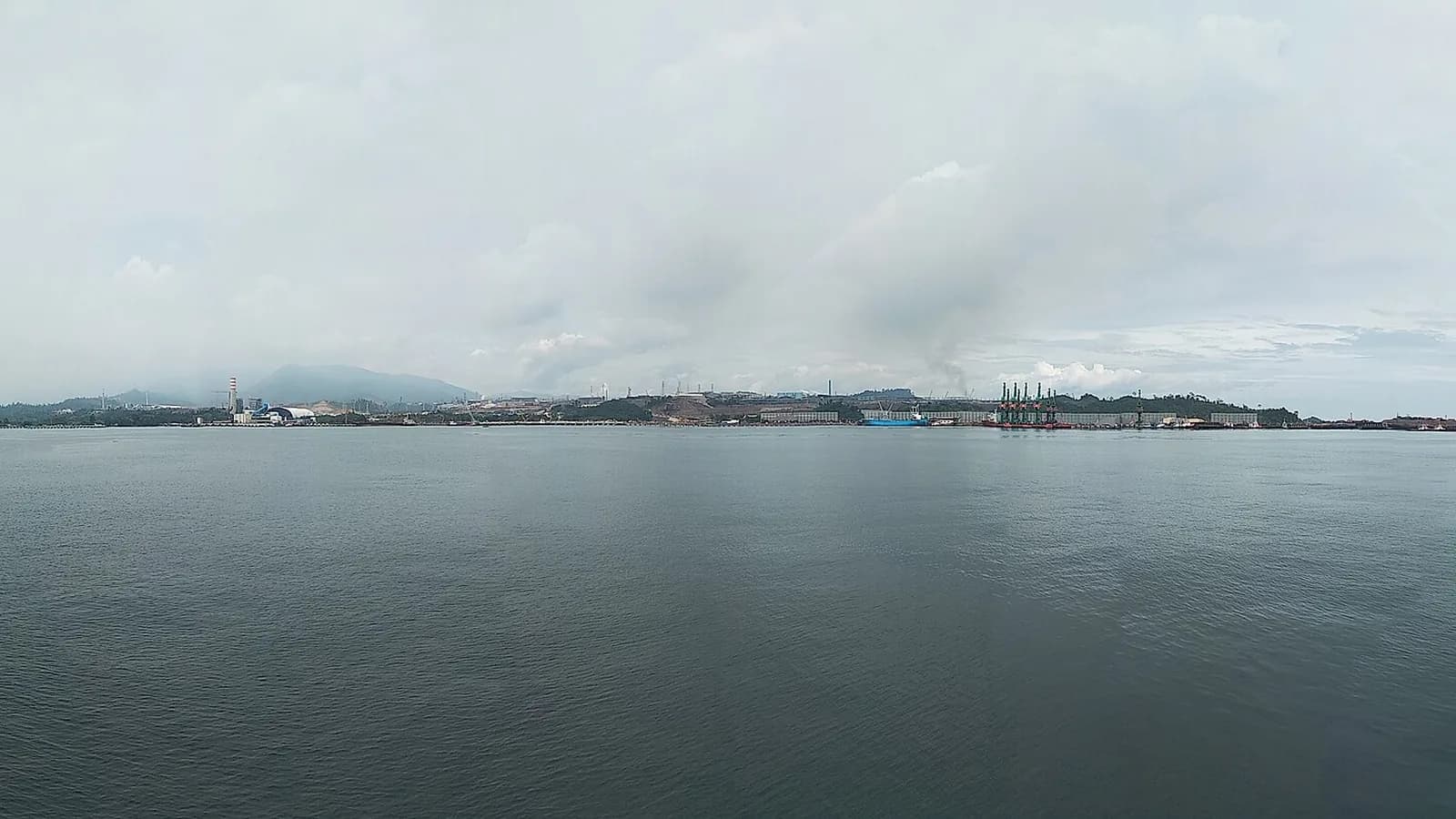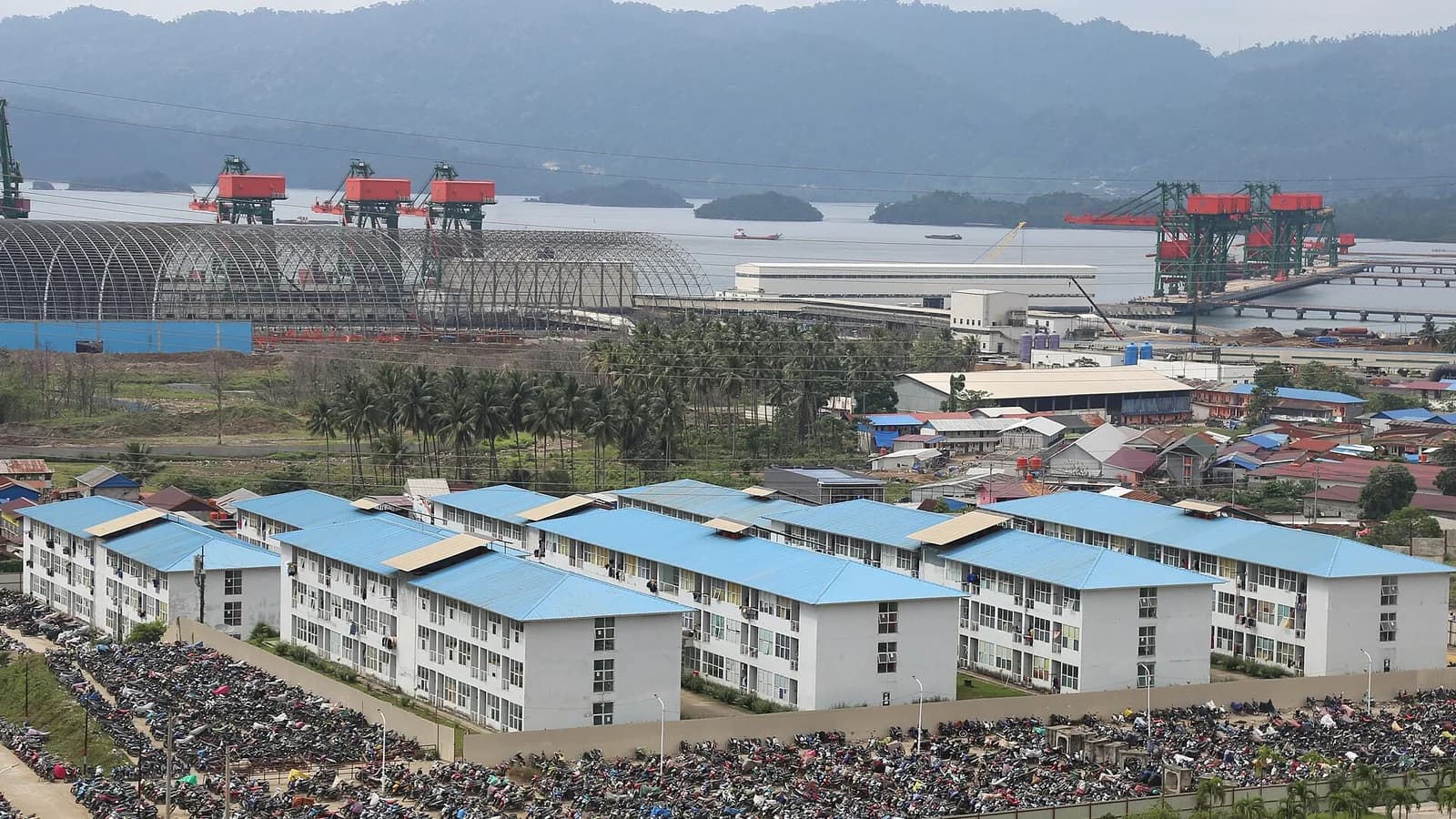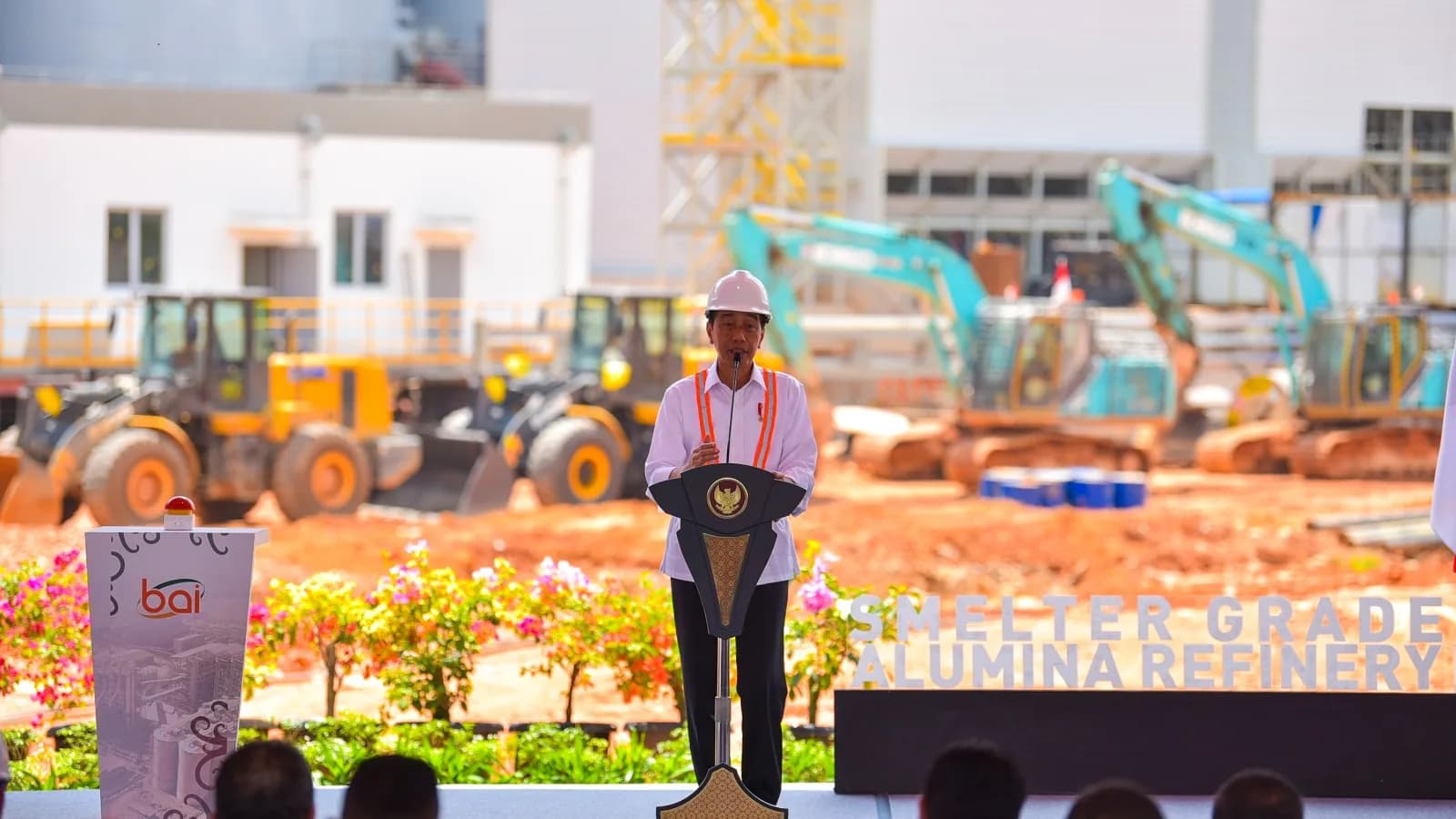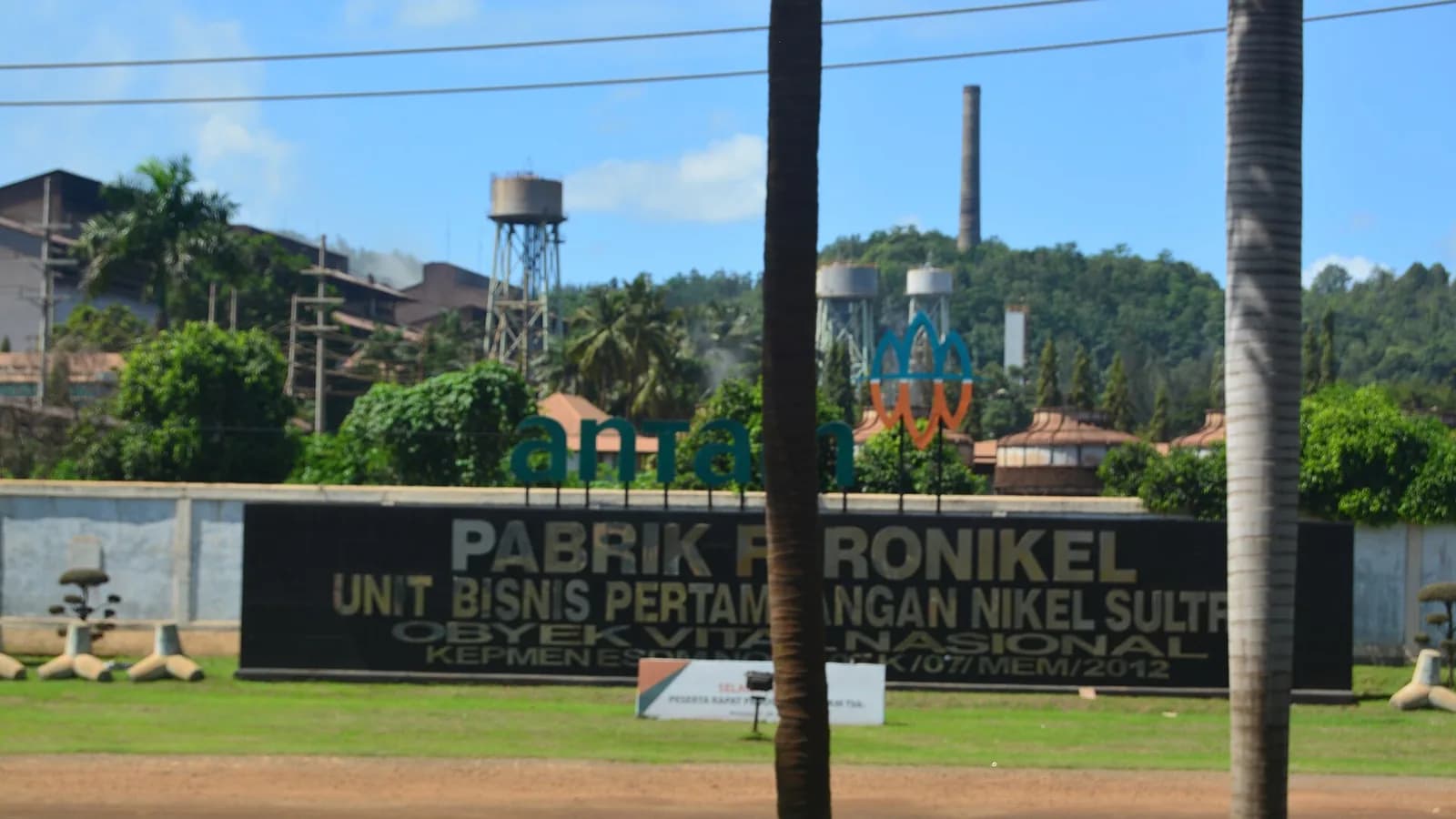
Indonesia prohibits the export of unprocessed minerals. It is not one prohibition and it was never one decision. It is a policy assembled commodity by commodity since 2009, and the government's own numbers show it producing three different results: a nickel processing industry built at scale, a bauxite export trade cut from hundreds of millions of dollars a year to tens of millions, and a copper concentrate exemption written for the companies whose smelters were not finished in time.
The instrument is Law No. 4/2009 on Mineral and Coal Mining, which prohibited exports of unprocessed minerals from January 2014. The application is a sequence of dates, and much of the drafting since has been about moving them. A nickel-ore export ban took effect on 1 January 2020. A bauxite export ban began in June 2023. Copper concentrate was exempted until May 2024, on a test of how far smelter construction had got.
Everything below comes from the U.S. Geological Survey: the Indonesia chapters of the *Minerals Yearbook* for 2023 and 2022, both advance releases, and the *Mineral Commodity Summaries* papers for nickel, bauxite and alumina, and copper issued in February 2026. Where those documents disagree with each other, or simply stop, this article says so rather than filling the gap.
The instrument behind the policy
USGS records the legal chain in four steps. Law No. 4/2009 included provisions that exporting unprocessed minerals would be prohibited starting in January 2014. Mining companies were exempted from that ban through 11 January 2017, on three conditions: that they could meet the minimum domestic refining requirement, that they pay export duties, and that they commit to building local smelters. On 11 January 2017 the government extended the exemption for five years.
That extension is where the policy's shape becomes visible. The ban is not a wall but a deadline with conditions attached, and the conditions are the policy. In 2020 the ministry postponed the general deadline to 10 June 2023 — from 11 January 2022, as the 2022 chapter records it. The nickel-ore ban did not wait for that date: it came into effect on 1 January 2020, in USGS's wording, to secure the supply of unprocessed nickel for domestic production of nickel products and to make the country the global supplier of electric-vehicle batteries.
Timeline
| Date | What changed |
|---|---|
| 2009 | Law No. 4/2009 provides that exporting unprocessed minerals is prohibited starting January 2014 |
| 2014–11 Jan 2017 | Companies exempted, conditional on meeting minimum domestic refining requirements, paying export duties and committing to build smelters |
| 11 Jan 2017 | The exemption is extended for five years |
| 1 Jan 2020 | The nickel-ore export ban takes effect |
| 2020 | The general export-ban deadline is moved to 10 June 2023 |
| Nov 2022 | A WTO panel rules that Indonesia's nickel ore export ban and domestic processing requirement are inconsistent with global trade rules; Indonesia appeals in December |
| 2022 | More than 2,000 mineral and coal mining licences revoked for failure to submit work plans on time |
| June 2023 | The bauxite export ban begins; copper, iron ore, lead-zinc and anode mud from copper concentrate may still be exported through May 2024 by companies that pass the construction test |
| May 2024 | That exemption window closes |
| April 2025 | The 1-million-ton-per-year alumina refinery at Mempawah ships its first alumina, to an aluminium smelter in North Sumatra |
| Feb 2026 | USGS records Indonesian bauxite production as having "declined sharply following Indonesia's 2023 ban on bauxite exports" |
Dates as recorded by the U.S. Geological Survey *Minerals Yearbook* Indonesia chapters for 2022 (March 2025) and 2023 (June 2025), and the *Mineral Commodity Summaries* 2026.
What the nickel ban produced
There are two halves to the answer, and they do not tell the same story.
Volumes first. USGS records Indonesian mined nickel rising 29 percent in 2023 to about 2 million tonnes of nickel content, making the country the world's first-ranked producer at 54 percent of global production that year. Nickel pig iron output rose an estimated 22 percent to 9.9 million tonnes gross weight, "owing to the increased capacities driven by the Government's downstream program". The February 2026 edition puts mined nickel at 2,310,000 tonnes in 2024 and an estimated 2,600,000 tonnes in 2025, a further rise of about 13 percent, against a world total of 3.9 million tonnes.
Then value. The same chapters follow the export money:
| Year | Ferronickel / NPI exports | Intermediate products of nickel metallurgy |
|---|---|---|
| 2020 | US$5 billion | US$760 million |
| 2021 | US$7 billion | US$1.3 billion |
| 2022 | US$14 billion | US$6 billion |
| 2023 | US$15 billion | nearly US$7 billion |
Values as recorded in successive editions of the USGS Indonesia chapter. The two editions differ on the 2020 base for intermediate nickel products — US$760 million in the 2022 chapter, US$800 million in the 2023 chapter — which is itself a reminder to read the newest edition.
That is the clearest single measure of what the ban did. Ore left the ground and did not leave the country as ore; it left as ferronickel and as intermediate products of nickel metallurgy. The ferronickel line tripled in three years and the intermediate line multiplied by roughly nine.
Then price. Over the same period the average London Metal Exchange cash nickel price fell an estimated 11 percent, to US$15,000 per tonne in 2025 from US$16,812 in 2024. According to the International Nickel Study Group, cited in the same edition, the global primary nickel market has been in surplus since 2022 — 98,500 tonnes that year, 170,000 tonnes in 2023, 182,000 tonnes in 2024, and an estimated 189,000 tonnes in the first nine months of 2025 against 107,000 tonnes in the same period a year earlier. Processing capacity at home did not produce pricing power abroad.
The capacity itself is now large enough to be a policy subject in its own right. The 2023 chapter counts 44 Class II nickel smelters consuming 210 million tonnes a year of saprolite, with 25 more under construction and 28 in the planning phase, which together would consume an additional 200 million tonnes a year; and three Class I hydrometallurgical plants using high-pressure acid leaching in operation, consuming almost 24 million tonnes a year of limonite, with six under construction and ten planned for a further 80 million tonnes. It also records the ministry planning to limit construction of new Class II smelters, which produce ferronickel and nickel pig iron, to slow depletion of high-grade ore.
Bauxite: the same policy, a sharper result
Bauxite is where the policy bites hardest, and where the replacement capacity arrived last.
At the end of 2022 there were three alumina refineries and one aluminium smelter operating in Indonesia. The ministry anticipated that seven further plants would be built by June 2023, when the bauxite export ban was due. That year the country mined about 30.4 million tonnes of bauxite and exported about 19 million tonnes of it, with China as the sole destination.
The ban arrived and the seven plants did not. In June 2023, when it began, a total of eight alumina refineries and aluminium smelters were still under construction. The ministry had expected the downstream projects to be finished before the ban; the 2023 chapter attributes the delay in part to construction cost, citing an association estimate that an aluminium smelter costs about US$1.2 billion on average, more than a nickel smelter.
The trade numbers moved immediately:
| 2022 | 2023 | |
|---|---|---|
| Bauxite mined | about 30.4 million tonnes | about 30 million tonnes |
| Bauxite exported | about 18 million tonnes | about 2 million tonnes |
| Bauxite export value | US$623 million | US$68 million |
The 2022 chapter puts that year's exports at about 19 million tonnes; the 2023 chapter records 2022 as 18 million tonnes. Both are USGS figures, one edition apart.
Replacement capacity has since started to appear. USGS's February 2026 edition reports alumina output of 1,200,000 tonnes in 2024 and an estimated 1,500,000 tonnes in 2025, and records that in April 2025 a 1-million-tonne-per-year alumina refinery at Mempawah shipped its first alumina to an aluminium smelter in North Sumatra — capacity that "may support an increase in bauxite production". Indonesian bauxite production itself, on the same edition, is 9,900 thousand dry tonnes for 2024 and an estimated 10,000 thousand for 2025, against reserves of 2,900,000 thousand dry tonnes. We set out the edition-by-edition bauxite record separately in [Bauxite Mining in Indonesia](/en/news/bauxite-mining-in-indonesia).
The copper exception, and what it says about enforcement
The bauxite ban of June 2023 was not applied to every commodity at once. The 2023 chapter states it directly: the government allowed several companies to export raw minerals — copper, iron ore, lead-zinc and anode mud from copper concentrate — through May 2024, and the exemption was granted to companies that had completed more than 50 percent of their smelter construction.
Two companies are named. PT Freeport Indonesia and PT Amman Mineral Nusantara were granted licences to continue exporting copper concentrate and anode mud through May 2024, because construction progress at both smelters had exceeded 50 percent before the June 2023 ban took effect. The smelter behind the first of those licences is documented in the same chapter: PT Freeport Indonesia's Manyar copper smelter in Gresik, East Java, was 90 percent complete at December 2023, designed to process 1.7 million tonnes per year of copper concentrate, with an estimated construction cost of US$3.0 billion and completion expected in May 2024.
What happened after the exemption window closed in May 2024 is not recorded in the USGS documents read for this article, so this article does not say. What the February 2026 copper paper does show is a direction of travel: Indonesian mine production of copper at 1,010,000 tonnes in 2024 and an estimated 710,000 tonnes in 2025, while refinery production rose from 349,000 tonnes to 400,000 tonnes. USGS states no cause for the fall in mine output, and none is attributed here.
Enforcement, and the legal challenge attached to it
Two enforcement facts sit alongside the schedule.
In 2022 the government revoked more than 2,000 mineral and coal mining licences held by companies that had not submitted work plans on time, licences that had in some cases been granted years earlier. The President described the revocation as part of a governance improvement plan.
And in November 2022 a World Trade Organization panel ruled that Indonesia's export ban and domestic processing requirement on nickel ore, in place since January 2020, were inconsistent with global trade rules. Indonesia filed an appeal in December. The European Union — which had requested consultations in 2019 and the establishment of a panel in 2021 — noted its disagreement with that appeal. The 2023 USGS chapter does not report the outcome, and neither does this article.
What it means for an investor
- The ban is a schedule, not a wall. Every date in it has moved. The general prohibition set for January 2014 was exempted to 11 January 2017, extended five years, then pushed to 10 June 2023. Treat the next date as a negotiating position rather than a fact.
- The exemption test is physical construction progress. Companies that had completed more than 50 percent of a smelter were allowed to keep exporting raw copper, iron ore, lead-zinc and anode mud past the June 2023 ban. Documented progress on a plant is therefore a commercial instrument.
- Domestic processing is where the value went. Ferronickel and intermediate nickel exports together were worth about US$22 billion in 2023 against US$5.8 billion in 2020, while bauxite export value fell almost 90 percent in a single year to US$68 million.
- Volume is not price power. Indonesian mined nickel rose about 13 percent in 2025 while the LME cash price fell about 11 percent, in a market that has been in surplus since 2022 on International Nickel Study Group figures.
- Capacity lags the policy. Indonesia has aimed since 2009 at 53 smelters and refineries by 2024; about 20 new plants had been built as of 2022, and eight bauxite plants were still under construction when their ban began.
- Expect further dates. USGS expects the government to extend bans to copper and silica sand and other raw materials in the short and medium term, and to consider limiting new ferronickel and nickel pig iron smelter construction to preserve ore. For the permit work that sits behind any of this, see [Mining Permit Services](/en/layanan-izin); for projects and assets, see the [Marketplace](/en/marketplace).
Catatan Teramine
This section is Teramine's editorial assessment. It is not a statement of fact from USGS, from the Ministry of Energy and Mineral Resources or from any other body named above.
Read as a single policy, the export ban has done what it was designed to do and produced a result its designers may not have wanted. The designed part is visible in the export values: ore stopped leaving as ore, and by 2023 the country was shipping ferronickel worth US$15 billion a year where it had shipped US$5 billion in 2020. The unintended part is the price. A market in surplus since 2022 has steadily cheapened the product the policy was built to create, which means part of the rent from downstreaming is being transferred to the buyers.
The comparison between the two commodities is the more useful lesson for anyone underwriting a project here. Nickel had a domestic processing industry before the ban and absorbed it; bauxite had three refineries and one smelter, and the export trade collapsed from US$623 million to US$68 million in twelve months while eight plants sat half-built. The difference was not the policy — it was the same policy — but the readiness of the receiving industry. That is the variable a foreign investor should measure before the next deadline, rather than the deadline itself.
It is also worth keeping the scale in view. On USGS figures, mining and quarrying was about 11 percent of Indonesian GDP in 2023, down from 12 percent in 2022, while base-metals manufacturing rose to 0.96 percent from 0.86 percent, and mining and quarrying employed about 1.66 million people, or 1.2 percent of total employment. Downstreaming is real and it is visible in the statistics; it is not yet large enough to absorb a mistake in the timing of a ban, which is precisely why the copper exemption was written.
What we could not source, and therefore did not state
- Whether the copper concentrate ban is now enforced without exemption, and whether any company has been granted relief since May 2024. No page read in this run states it.
- The outcome of Indonesia's December 2022 appeal in the WTO dispute over the nickel ore ban. The USGS chapter that records the panel ruling and the appeal does not report a decision.
- The cause of the fall in Indonesian mined copper output from 1,010,000 tonnes in 2024 to an estimated 710,000 tonnes in 2025. USGS publishes the figure without an explanation.
- Any royalty rate, export duty rate, tax figure or levy. None was read, so none is stated.
- Indonesian government production, export and investment-realisation figures for 2026. Only USGS data is used here.
- Ownership or divestment rules for foreign shareholders in Indonesian mining licences. Not covered, and not sourced.
- Company-level revenue, cost or margin figures. The only cost figures here — about US$1.2 billion for an average aluminium smelter and US$3.0 billion for the Manyar copper smelter — are as stated by the sources named below.
- The current count of operating smelters in 2026. The counts given are the 2023 position as recorded by USGS.
Sources
Every figure, date and quotation above is taken from the documents listed below, each of which was read for this article.