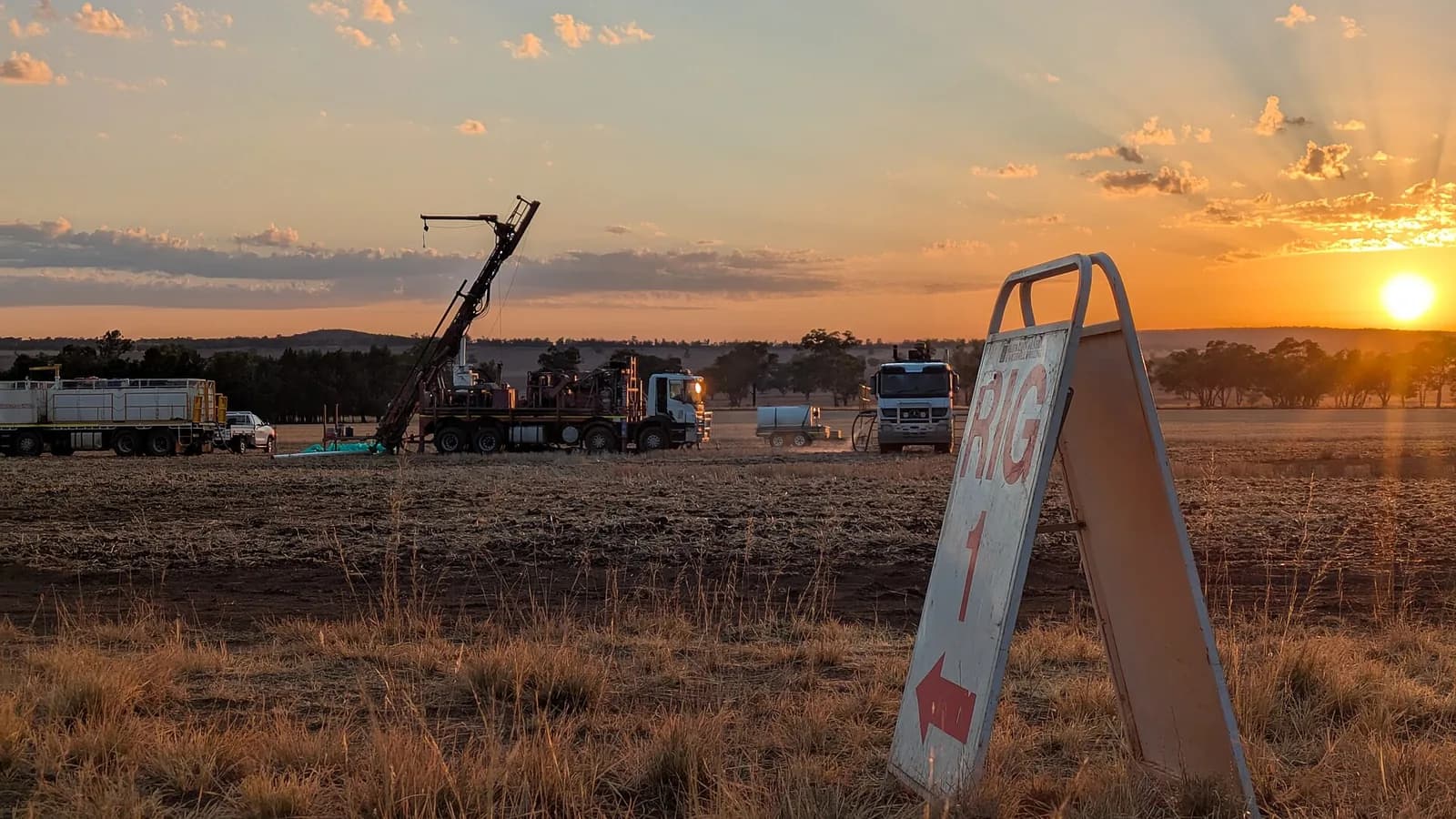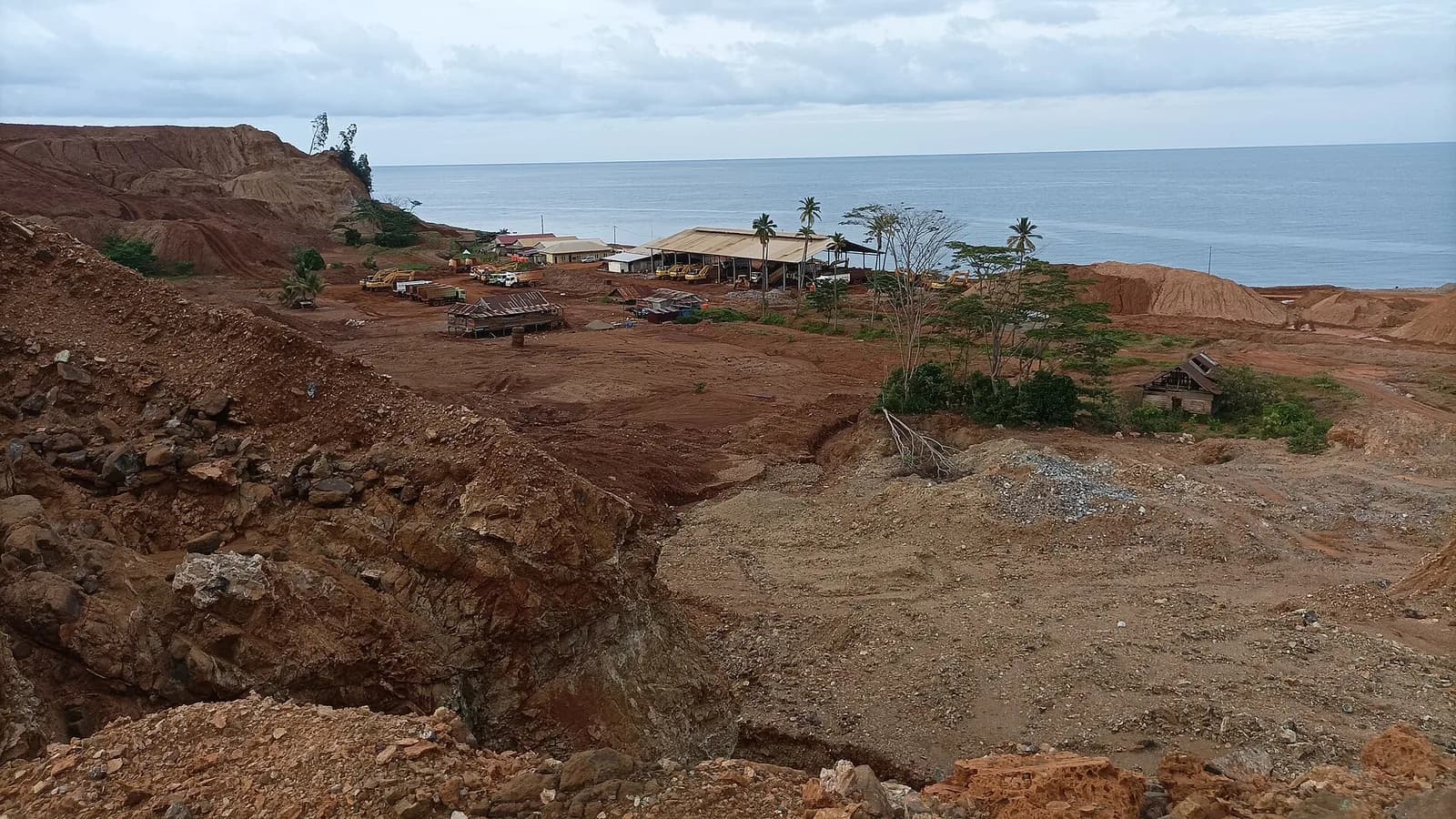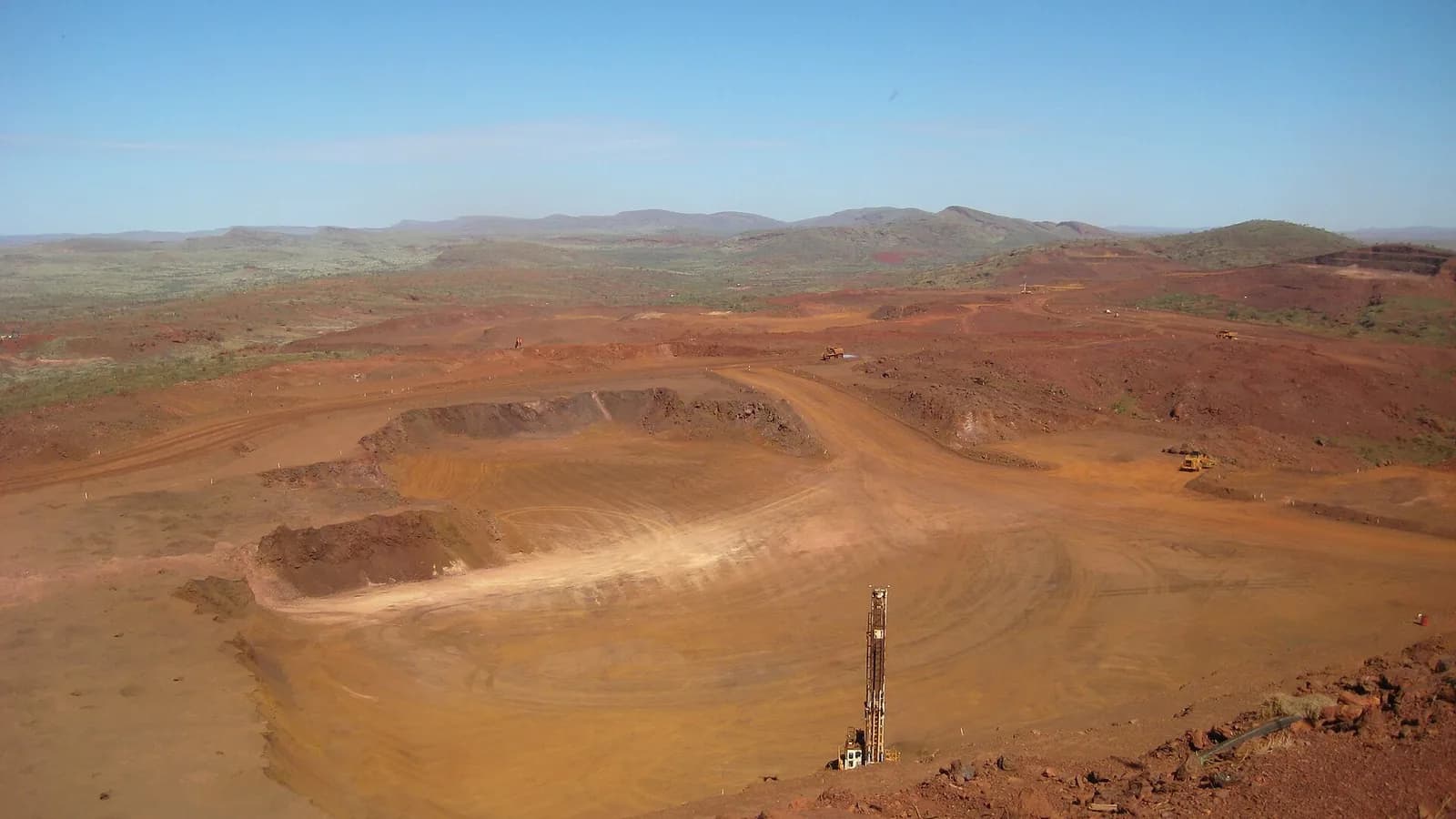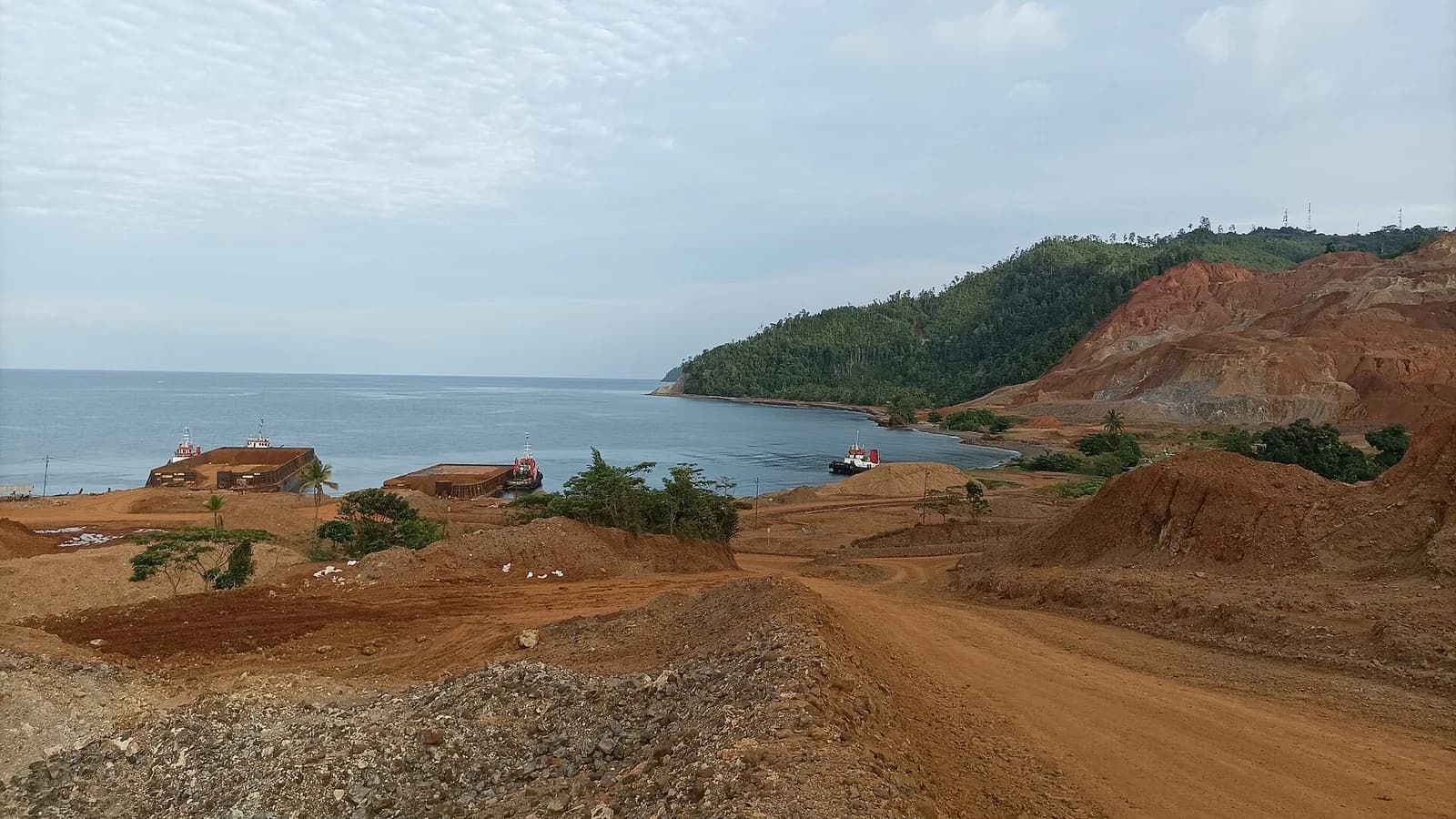
An open-pit mine in Indonesia is permitted on a set of slope angles. Those angles are not just an engineering choice made by the contractor: the government's good-mining-practice guideline says how the stability of a pit wall and a waste dump must be studied, what minimum safety factor it must reach, how it must be monitored, and what the holder must do — and report — when it does not hold.
For an investor, that makes geotechnics a licence question as well as an engineering one. A slope design that does not meet the regulated criteria is a gap in the approved feasibility study; a slope failure is a reportable event that triggers a re-analysis. This explainer sets out how Indonesia mining geotechnical slope stability is regulated. Every rule below is taken from the decree listed at the end, which we read in its official full text.
The instrument
| Instrument | Date | Its role |
|---|---|---|
| Ministerial Decree (Kepmen) ESDM No. 1827 K/30/MEM/2018 on the Guideline for Implementing Good Mining Engineering Practice | 7 May 2018 | Annex II (*Pedoman Pengelolaan Teknis Pertambangan*) sets the geotechnical requirements for the feasibility study, the mine plan and surface-mine operations; Annex III covers mining safety |
The decree names Ministerial Regulation (Permen) ESDM No. 26 of 2018 on good mining practice among its legal bases. The ministry's legal database (JDIH ESDM) records the decree as partially revoked by Kepmen ESDM No. 111.K/MB.01/MEM.B/2024 — but only as to one provision on reopening areas that have already been reclaimed, in Annex VI. The geotechnical provisions in Annex II are not touched by that revocation.
What "mine geotechnics" means in the rulebook
The decree defines mine geotechnics (*geoteknik tambang*) as the technical management of mining that covers geotechnical investigation, sample testing and data processing, the application of the recommended geometry and dimensions of mine openings, and the monitoring of the stability of those openings. A geotechnical study (*kajian geoteknik*) is the laboratory and/or field investigation of the physical and mechanical properties of rock and soil needed for mine planning and design.
It also defines the probability of failure — the likelihood that a slope may fail because one or more geotechnical parameters deviate from those used in the slope safety-factor calculation, expressed as the chance that the safety factor falls to 1 or below (FK ≤ 1).
The point of the definitions is that geotechnics runs through the life of the mine: it starts as a study, becomes a design, and ends as a monitoring duty.
Stage 1: the geotechnical study inside the feasibility study
The decree lists a mine geotechnical study among the minimum components of the technical feasibility assessment in a feasibility study, alongside geology, resources and reserves, hydrology and hydrogeology, acid mine drainage, and mine planning. The geotechnical part must cover at least:
- Investigation — the number, depth and location of core drill holes, lithological description, geotechnical sample preparation, measurement and analysis of geological structure, seismicity, the effect of blasting, and the results of hydrological and hydrogeological investigation;
- Sample testing — the testing laboratory and the results of physical and mechanical property tests;
- Data processing — a model built from those parameters that yields safety factors and probabilities of failure against the acceptance criteria in the table below;
- Recommendations — the geometry and dimensions of mine openings and dumps, any support required, and a monitoring plan to assess the stability of the openings.
Three further rules are attached:
- the core holes must be able to represent all the lithology and geological structure in the planned pit and planned facility areas;
- seismicity must use the peak ground acceleration coefficient under SNI 1726:2012 and its amendments — and if an earthquake occurs with a coefficient larger than that standard, the larger coefficient must be used;
- the blasting input covers vibration acceleration, frequency, particle velocity and the fragmentation produced.
The acceptance criteria: safety factor and probability of failure
Table 1 of Annex II sets the minimum safety factors (FK) and the maximum probability of failure (PoF, the probability that FK ≤ 1) for a mine slope:
| Slope type | Consequence of failure | Static FK (min) | Dynamic FK (min) | PoF (max) |
|---|---|---|---|---|
| Single slope (bench) | low to high | 1.1 | none | 25–50% |
| Inter-ramp | low | 1.15–1.2 | 1.0 | 25% |
| medium | 1.2–1.3 | 1.0 | 20% | |
| high | 1.2–1.3 | 1.1 | 10% | |
| Overall slope | low | 1.2–1.3 | 1.0 | 15–20% |
| medium | 1.3 | 1.05 | 10% | |
| high | 1.3–1.5 | 1.1 | 5% |
The consequence class is not chosen freely. The decree defines it:
| Consequence | Any one of these consequences |
|---|---|
| High | loss of life; serious injury to more than three people; damage to mining facilities and infrastructure of more than 50%; production stopped for more than 24 hours; reserves lost and unrecoverable; environmental damage reaching outside the IUP area, including settlements |
| Medium | serious injury; facility damage of 25% to 50%; production stopped for more than 12 and less than 24 hours; reserves buried but still recoverable; environmental damage inside the IUP area |
| Low | minor injury; facility damage of less than 25%; production stopped for less than 12 hours |
Three calculation rules sit on top of the table:
- the safety factor of the overall pit slope is calculated using peak shear strength, while that of a single pit slope and a dump slope uses residual shear strength;
- for dump slopes specifically, the safety factor is calculated with residual cohesion and residual internal friction angle;
- for underground openings, the minimum safety factor is 2.0 for a fixed facility and 1.5 for a non-fixed facility.
Stage 2: the geotechnical management system in the mine plan
Once in production, an IUP or IUPK Operation-Production holder must prepare annual, quarterly and monthly mining plans based on the approved feasibility study. The quarterly and monthly plans go into a technical work plan that a mine inspector may examine at any time. Among the minimum contents is a geotechnical management system, which must contain at least:
- the geometry and dimensions of the pit openings and dumps (and/or underground openings);
- movement criteria — the thresholds against which slope movement is judged;
- the method and schedule for monitoring movement of pit and dump slopes;
- the follow-up to monitoring results;
- a landslide hazard map based on an assessment of slope conditions, and a hazard-mitigation map covering at least the danger zones, safe zones, muster points and evacuation routes;
- where the safety factor and probability of failure of a pit slope, the residual-strength safety factor of a dump slope, or the safety factor of an underground opening do not meet the values in the feasibility study, a technical study covering at least the geometry and dimensions, service life, safety factor, reinforcement measures, monitoring plan and follow-up, and a risk analysis.
Separately, the Kepala Teknik Tambang (KTT, the mine's state-approved technical head) must set standard procedures for, among other things, monitoring, inspecting and maintaining the stability of pit slopes and final pit walls — covering at least keeping slope geometry and dimensions as designed, slope displacement, the monitoring method and instruments and where they are placed, water saturation, and/or ground vibration from blasting, plus evaluation and follow-up — and for monitoring the stability of overburden and in-pit dumps.
Stage 3: operating rules for pit slopes
For active mining slopes at a mineral or coal surface mine, the decree requires that:
- if a geological condition not identified in the earlier geotechnical study is found, the holder must take slope-safety measures, increase the intensity of slope-movement monitoring, ensure stability and act on the monitoring results, and prepare a follow-up geotechnical study that a mine inspector may examine at any time;
- every slope failure on a mining slope is investigated and followed by a geotechnical back analysis;
- every mining slope has a drainage system able to carry the highest run-off flow;
- overburden stripping follows the geometry and dimensions recommended by the geotechnical study.
Final pit walls
The final wall is the slope the mine leaves behind, and the decree treats it more strictly:
- final-wall design must follow the approved feasibility study; if the wall departs from plan, it must be based on a technical study confirming stability and the final pit limit;
- where blasting is used to form the final wall, overbreak must be prevented, and the last row of blast holes must be at least two single-slope heights away from the planned final wall, unless a technical study says otherwise;
- final-wall stability must be monitored continuously with adequate instruments, and the KTT sets the monitoring criteria and follow-up;
- a safety bund at the crest to hold falling rock must be at least 1 metre plus 4% of the slope height;
- where the final depth exceeds 45 metres, there must be two access roads, one in and one out;
- where the final wall's safety factor and probability of failure do not meet the feasibility-study values, a technical study is needed — and any technical study on the final wall is submitted as a special report to the Head of Mine Inspection (KaIT).
Waste dumps
Dumps carry their own rules:
- a single slope on an out-of-pit overburden dump has a vertical-to-horizontal ratio of 1:2 (a 50% gradient), unless a technical study supports a different design;
- the dump site must have adequate bearing capacity, and topsoil must be stripped first;
- dumping on former ponds, former river channels and swamps is prohibited unless based on a technical study;
- bottom-up dumps are compacted, either with a compactor in stages or with haul trucks in layers no thicker than one-third of the truck's height, unless a technical study says otherwise; loose-tipped (*curah*) dumps need a technical study of stability, density and recommended slope angle;
- an overburden dump must not be placed over mineral or coal resources or reserves; if it is, a technical study goes to the KaIT;
- for an in-pit dump in an area still being mined, the toe must be at least three times the total dump height from the active work area, unless a technical study says otherwise; where the base is a mined-out area, it must be free of layers that could act as a slip plane and free of water and mud;
- where a dump's residual-strength safety factor misses the feasibility-study value, a technical study is required, and for in-pit dumps it goes to the KaIT as a special report.
Where blasting meets the slope
The decree links two disciplines that are often managed by different teams. When rock is broken by drilling and blasting, the vibration acceleration, frequency and particle velocity produced by a blast must not exceed the values used in the safety-factor calculation of the pit slope and/or dump. Any change to blast geometry and dimensions, explosive type, blast safety distance, vibration level or method needs a technical study first. Vibration limits toward buildings follow SNI 7571:2010.
In other words, the blast design is constrained by the geotechnical model. A mine that blasts harder to raise output without revisiting the slope calculation is outside the rule. (Teramine's [blasting safety explainer](/en/news/indonesia-mining-explosives-blasting-safety) covers the explosives duties themselves.)
Non-metal minerals and rock
For non-metal mineral and rock quarries the rules are lighter. The geotechnical management system must contain at least the geometry and dimensions of the pit and dumps, a monitoring programme and landslide mitigation. Where signs of a landslide appear or one occurs, the operator must secure the slope, increase monitoring, ensure stability, and carry out a geotechnical investigation to update the recommended geometry. A change to the final-wall geometry approved in the feasibility study must be explained and submitted to the KaIT.
Catatan Teramine
*This section is Teramine's editorial analysis, not a statement of fact and not legal or engineering advice.*
Check the consequence class before the safety factor. The table only means something once the consequence class is right. A wall whose failure could kill, halt production for more than 24 hours, lose reserves for good or send damage beyond the IUP boundary sits in the high class on the decree's own definitions — and the minimum overall-slope FK rises to 1.3–1.5 with a PoF ceiling of 5%. A feasibility study that classes such a wall as low has a gap.
Steeper is cheaper, until it is not. The slope angle drives the stripping ratio, and the stripping ratio drives cost. An investment case built on steeper walls than the approved feasibility study supports is not an upside — it is a change that needs a technical study, and possibly a report to the inspectorate, before it can be mined.
Ask for the monitoring trail, not the design report. The rulebook requires movement criteria, a monitoring schedule, follow-up, a hazard map and a back analysis after every failure. In due diligence, the records of those — prism or radar data, exceedance logs, back-analysis reports, special reports to the KaIT — show whether the system runs. A target that can show the design but not the monitoring is showing half the file.
Unplanned geology is a cost line. The duty to re-study when unexpected geology appears means geotechnical risk is not fixed at the feasibility stage. A model that assumes the feasibility-study walls hold for the life of mine carries no allowance for redesign.
Seismic inputs move. The rule that a larger observed earthquake coefficient replaces the SNI value means a seismic event near a project can reopen its slope design.
For the permit and technical-document work behind a specific licence, see Teramine's [permit services](/en/layanan-izin). Related explainers: the [mining safety management system](/en/news/indonesia-mining-safety-management-system), [mine water management](/en/news/indonesia-mine-water-management), [tailings management](/en/news/indonesia-mine-tailings-management), [mine closure](/en/news/mine-closure-in-indonesia), and the [environmental permit](/en/news/indonesia-mining-environmental-permit-amdal). Listed projects are on the [marketplace](/en/marketplace).
What we could not confirm
- Whether Annex II has been amended in detail since 2018. The JDIH ESDM record shows only the partial revocation in Annex VI. We did not find a newer geotechnical guideline for mineral and coal mining, but did not exhaustively check.
- The reading of the safety-factor table. The table was extracted from the official PDF; the single-slope row shows one static FK of 1.1 for all consequence classes, no dynamic FK, and a PoF range of 25–50%. If the printed layout differs, the official document governs.
- How Permen ESDM 26/2018 itself words the geotechnical duty. We read the 2018 decree that elaborates it, not the regulation's articles, for this piece.
- Enforcement data. We have no official figures on slope failures, inspector findings or sanctions related to slope stability.
Sources
- Kepmen ESDM No. 1827 K/30/MEM/2018 — Pedoman Pelaksanaan Kaidah Teknik Pertambangan yang Baik (7 May 2018), official PDF via JDIH Kementerian ESDM, and its JDIH record (status: partially revoked as to Annex VI only).